










Lack of mental health services on the Outer Banks creates problems for teens trying to live normal lives
May 21, 2013
By Murphy Grant
Associate Editor
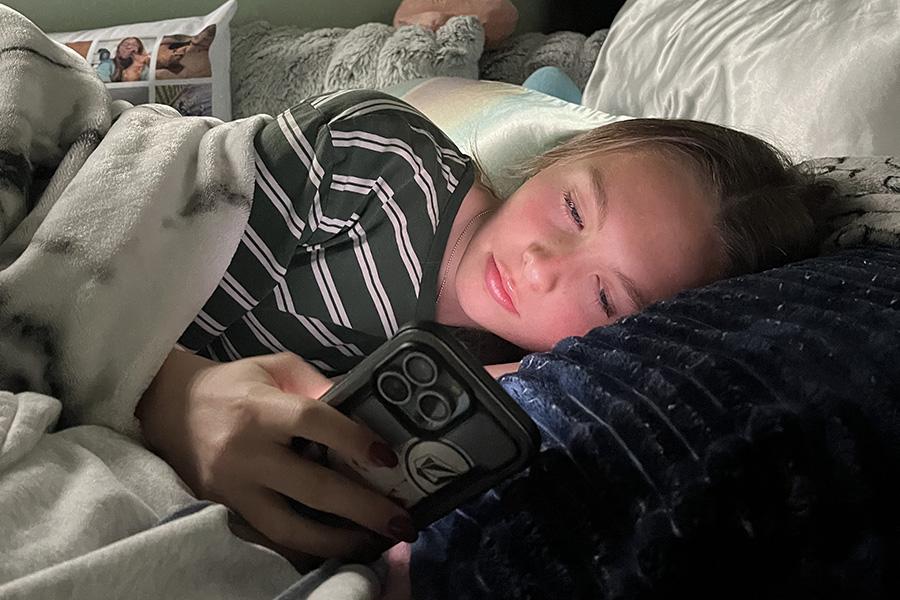
[dropcap]D[/dropcap]uring each school year, juniors in particular are under intense academic pressure. This pressure continues to build up over the course of the school year. During her junior year, senior Kaelyn Haddon felt her stress become overwhelming and her anxiety was taken to a new level.
The stress triggered the onset of obsessive-compulsive disorder and severe panic attacks. A lack of mental health services on the Outer Banks forced Kaelyn to travel to Virginia to get help.
[span4]
[toggle title=”Types of Mental Illness”][accordion title=”Anxiety Disorders”]
• Specific Phobias
• General Anxiety Disorders
• Social Anxiety Disorders
• Panic Disorder
• Agoraphobia
• Obsessive Compulsive Disorder (OCD)
• Post Traumatic Stress Disorder (PTSD)[/accordion][accordion title=”Mood Disorders”]
• Major Depressive Disorder (Clinical Depression)
• Bipolar Disorder[/accordion][accordion title=”Psychotic Disorders”]
• Schizophrenia
• Delusion Disorder[/accordion][accordion title=”Personality Disorders”]
• Eccentric: Paranoid, Schizoid, Schizotypal
• Dramatic/Emotional: Antisocial, Borderline, Histrionic, Narcissistic
• Fear-Related: Avoidant, Dependent, Obsessive-Compulsive Personality Disorder[/accordion][accordion title=”Eating Disorders”]
• Anorexia Nervosa
• Bulimia Nercosa
• Exercise Bulimia
• Binge-Eating disorder[/accordion][/toggle][/span4]
[span4]
[toggle title=”Dealing with mental health issues”][accordion title=”Facts about mental health”]• About half of mental disorders begin before the age of 14.
• Around 20% of the world’s children and adolescents are estimated to have mental disorders or problems, with similar types of disorders being reported across cultures.
• Rates of mental disorder tend to double after emergencies.
• Human rights violations of psychiatric patients are routinely reported in most countries.
• Depression is ranked as the leading cause of disability worldwide.[/accordion][accordion title=”Getting help fast”]
• A person can contact East Carolina Behavioral Health. ECBH is a mobile crisis team that can be activated by calling 1-877-685-2415. They can serve Dare County residents within two hours of a call. They assist with crisis stabilization and referral for ongoing care.
• If someone is suicidal or homicidal or in need of immediate medical services, 911 should be called for emergency services. The hospital can provide medical care for stabilization, clearance and transfer to another facility for inpatient psychiatric care or detoxification at a medically supervised detox facility outside of Dare County.
• You can also contact one of the counseling or therapy centers on the Outer Banks as a starting point or to get a referral for psychiatric care.[/accordion][/toggle][/span4]
[offset4]OCD is a type of anxiety disorder that is a potentially disabling illness. OCD traps people in endless cycles of repetitive thoughts and behaviors, according to WebMD.com. Kaelyn sufferers from two forms of OCD: “checking” and “perfectionist.”[/offset4]
“I used to check all my doors, windows and under the bed repeatedly until everything was in the right place and it looked right. I did that to relieve the anxiety but that made it worse,” Kaelyn said. “I also have the perfectionist type and that means everything has to be perfect and in its place. It doesn’t sound bad, but it causes issues and makes your anxiety worse. I used to do it for two or three hours every night, over and over.”
Kaelyn started off checking under her bed. Then it turned into checking her closet and then closets in other rooms of the house until it got progressively worse, spending hours every night until everything was perfect. She then decided to look up her symptoms online.
“I was noticing my strange behavior and after repeated nights of checking all my closet doors and just feeling anxious I went online and took a few OCD tests,” Kaelyn said. “All the tests came back saying I had OCD and that I should see a doctor. I told my parents and they made the appointment.”
After Kaelyn was diagnosed with OCD her therapist, Dr. McGrogan, was only able to send recommendations to her family doctor to prescribe Prozac, which later was switched to Zoloft due to side effects. In order to obtain the specific medicines she needs, Kaelyn has to travel to Virginia to see a psychiatrist. No doctor or therapist on the Outer Banks was able to prescribe it to her.
“I believe we do have a lack of mental health treatment on the Outer Banks. We have very limited psychiatry services. A psychiatrist specializes in medication management for depression, ADHD and anxiety,” Clinical Social Worker Kelly Roberts said. “On the Outer Banks you can not pick up the phone and make an appointment with a psychiatrist as you can for a dentist, family doctor or counselor. I am aware of people that travel to Chapel Hill and Virginia for face-to-face medication evaluations. Others use a computer screen to ‘see’ a psychiatrist in another part of the state.”
North Carolina used to have centralized mental health and substance abuse treatment. A person could go to one big provider for testing or counseling and to see a doctor. The state restructured the services by decentralizing them, Roberts said.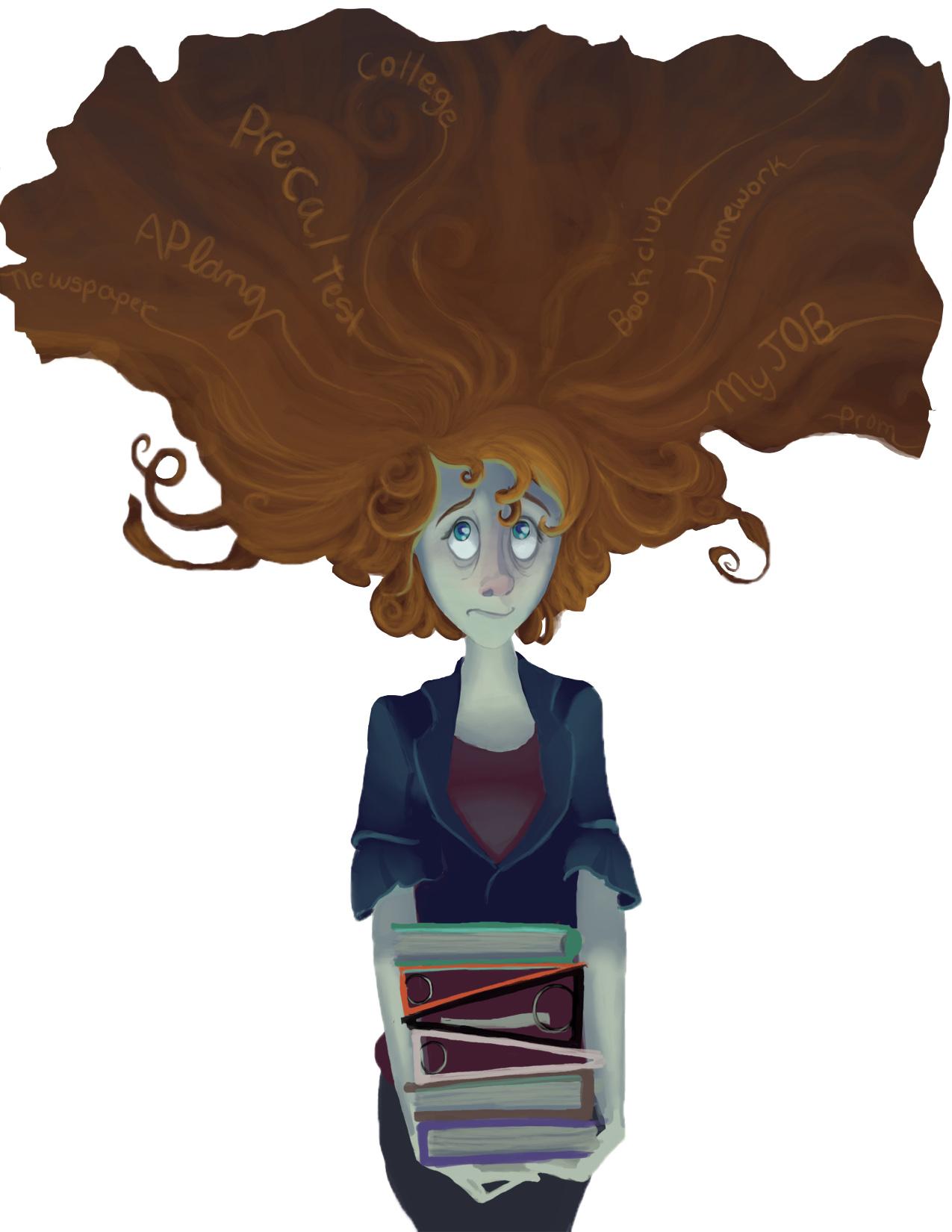
“Locally, we are seeing a lot of independent providers who are no longer participating with Medicaid,” Roberts said. “Recent changes in the Medicaid restructuring has made some local clinicians stop accepting Medicaid. This affects access to care for counseling as well as for psychological testing.”
After understanding her diagnosis, Kaelyn faced the added stress of trying to avoid missing school and managing to get help at the same time. Homework and sleep often clashed making it harder to improve her condition.
“Junior year, when we would have to go to Virginia, I wouldn’t want to miss school, so we would schedule my appointments for after school. It was a five-hour trip total on top of homework and volleyball,” Kaelyn said. “I would already be going to bed at 2 a.m. on a normal night, which isn’t good for any mental illness. A lack of sleep can make it 10 times worse. I have learned that sleep should take priority.”
Before Kaelyn was able to see the psychiatrist in Virginia she had to deal with her panic attacks with no medicine to aid her. At its worst she would experience an attack once or twice a week and it would last all day.
“I didn’t have a panic attack until the OCD got really bad and before I had started therapy. You feel yourself start to get anxious and then angry and then you lose control. I would hyperventilate, cry and scream if it was bad,” Kaelyn said.
Virginia offers more specialists in psychiatric care and endocrinology. Kaelyn has needed an endocrinologist for help with hormones related to the OCD.
As a rural community, the Outer Banks has a lack of providers for these services. Many residents have to travel to larger cities to get help, Roberts said. This also causes problems for families that can not afford private services.
“My parents have definitely been great. I wouldn’t be better right now if I didn’t have them,” Kaelyn said. “They take off work and drive me to Virginia. A lot of parents aren’t able to do that, and if I didn’t have that I wouldn’t have the medication for the panic attacks. The medicine is probably more vital than the Zoloft because panic attacks can be dangerous.”
Although her family faces difficulties, they are also thankful for the therapy Kaelyn received on the Outer Banks.
“We were really lucky to have found a therapist that has helped Kaelyn tremendously. The talking she does at therapy has been really beneficial,” Kaelyn’s father Tom Haddon said. “In order to get any pharmaceuticals prescribed , we must see a physiatrist and we have to travel for that. That is the downside of being on the Outer Banks. We don’t have really big good medical resources.”
Kaelyn hopes that changes are on the way.
“I would like there to be doctors on the Outer Banks that can prescribe the stronger medication for worse issues. If my panic attack gets bad, there is no place I can go for immediate help, I can’t drive to Virginia to talk to my doctor or get medicine from him if I run out,” Kaelyn said. “Emergency situations are scary. It’s not as scary because I have my parents here taking care of me. If I didn’t have a good home situation, I would be much more scared because panic attacks are really scary. I start to hyperventilate and potentially stop breathing. It’s really important for me to take medicine when I start to have one.”
Kaelyn has proved she can handle the stress situations and can be a role model to others going through the same thing, Mr. Haddon said.
“I am most proud that Kaelyn has been open about the whole thing and she has never tried to hide it,” Mr. Haddon said. “She has been an advocate for trying to remove the stigma behind the issues.”
Send comments to grantmu1212@daretolearn.org
Graphic by Amelia Kasten
Sidebar information reported by Murphy Grant and Kaitlynn Hunt
Sidebar information source Clinical Social Worker Kelly Roberts and TeenMentalHealth.org