











By Jaida Snyder, Special to Nighthawk News
*DING* *DING* *DING* The alarm goes off as you sit up in warm blankets surrounded by the freezing air. With puffy eyes barely awake enough to keep open, the feeling of being more tired than ever surrounds you. Rolling out of bed, shivering all over, you walk toward the dresser to get ready, feet dragging on the floor, back hunched, sleepily off to school.
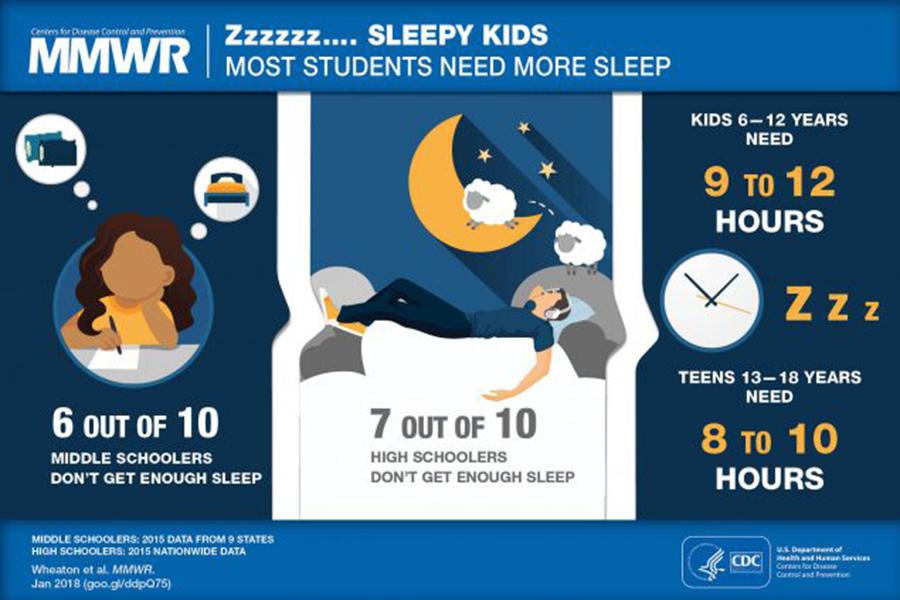
Getting enough sleep is always something people struggle with, especially when they’re high school students. It has been proven that getting adequate sleep is a major factor in a student’s health, wellbeing and academic performance. Studies show that children who don’t get enough sleep are at a higher risk of having autoimmune issues or health problems like type 2 diabetes, obesity and a decline in mental health. All of these can lead to a drop academically.
Children from 6 to 12 need nine to 12 hours of sleep a day, and 13- to 18-year-olds need eight to 10 hours a day. Without that much sleep, the school day can be challenging.
Sophomore Annalease Hilbert said that sleep definitely contributes to how she feels throughout the day. Her morning wakeup routine also varies greatly.
“It depends on if I’m at my mom’s house or my dad’s house because they live different distances from the school,” she said. “If I’m with my mom, I wake up at 6:40, and if I’m with my dad it’s 7:20.”
Hilbert stated that she sometimes needs a little help getting through the school day: “I like Red Bulls. They help make up for the sleep I didn’t get.” It seems like most of the planet relies on coffee or energy drinks to boost their energy, but the reliance on those can add to fatigue, as well.
Most people, including Hilbert, get seven or eight hours of sleep on an average school day. Her step-brother, Isaiah Deltoro, said “I get between two and eight hours of sleep at night. The new weekly challenges for Fortnite come out, so you know, I gotta stay up and grind those out.”
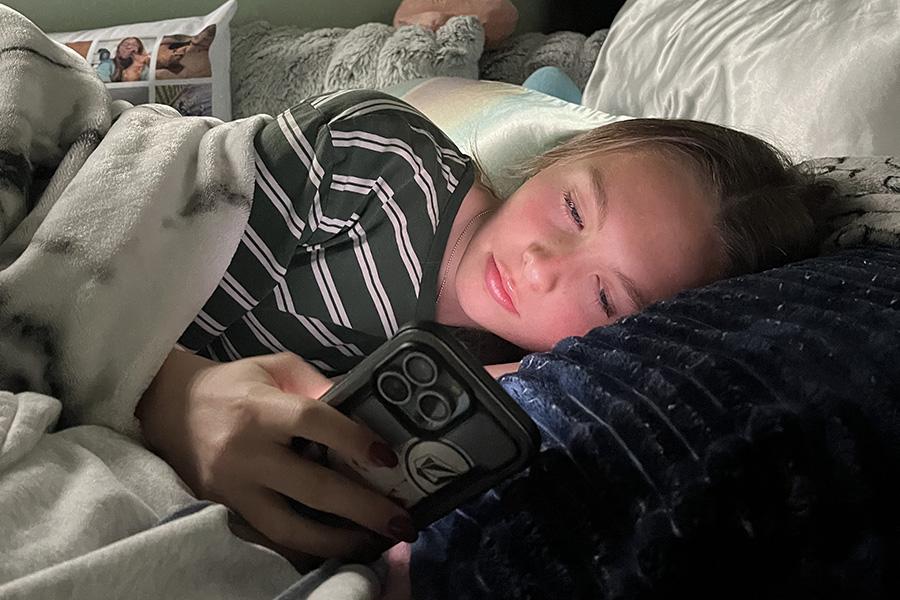
With over 75% of teens playing video games and 95% having phones, computers, TVs or other electronic devices, there are plenty of ways teens can experience insomnia and other sleep issues.
Deltoro said late nights playing video games don’t bother him: “It affects me positively, you know, because I think your grades depend on you, not the amount of sleep you get or what games you play. So I keep my grades pretty good.”
Napping is another piece of the puzzle when it comes to sleep schedules. When sophomore Olivia Hobbs was asked if she takes naps or thinks naps are important to her sleep schedule, she replied with, “I love naps. I think they’re very beneficial, because when you’re super tired you can just take a 30-minute nap and feel great again. Shorter naps are the way to go for sure.”
There are many studies that prove her point that “shorter naps are the way to go.” Short naps allow your mind and body to rest without you entering into a deep sleep, which when woken from too soon can leave you feeling worse than before.
The amount of sleep we get as we age definitely changes, Social Studies teacher Savannah Wallace said.
“I used to be a swimmer, so we would have to get up at 6 a.m. and I would get five hours of sleep at night. Now I’m better about going to bed earlier,” Wallace said.
Wallace added that her students can tell when she’s had a good night’s sleep and it does affect the way the class moves: “When I get my sleep, I’m hyper and fun, but if I don’t get my sleep I’m sad and chaotic.”
With so many things keeping so many people from getting a good night’s sleep, it’s a good thing caffeine is a thing, with most teachers and students having multiple coffees a day.
“If I don’t have a morning coffee, the world is over,” Wallace said.
Sophomore Jaida Snyder wrote this story for her Intro to Publications semester project. She can be reached at snyderja3313@daretolearn.org.