















By Ella Heath, Special to Nighthawk News
Vibrant music floats through the air, feet shuffle against the floor and corrections are being yelled across the room. But there is one thing you can’t hear at the studio – the thoughts that flood through more than 75% of dancers’ minds:
“Why do I look like this?”
For most dancers, their dance season starts early September and lasts until May or June. Throughout that time, they’re learning multiple three-minute routines to perform at the year-end recital. During this time is also when dancers will begin to develop body dysmorphia, or in some cases, continue their battle with the disorder.
According to Dance Nutrition, 75% of dancers feel pressure to lose weight. They often feel as if a lower body weight offers greater performance opportunities.
Body dysmorphia is a mental disorder where one can’t stop thinking about flaws in their appearance that are not noticeable to others. This mainly originates from negative body image and can easily shift to eating disorders.
Most dancers on the Outer Banks describe their dance teacher as supportive and helpful; however, that doesn’t prevent students from struggling with body image issues.
Carson Davis is a teacher at Island School of Dance who strives to make her class a judgment-free zone. She encourages students to wear whatever they feel most comfortable in, managing to create a safe place for dancers to be themselves.
“When you come through the door and I am in charge, anything flies – there is nothing you could say that would upset me, so it’s a really safe place,” Davis said.
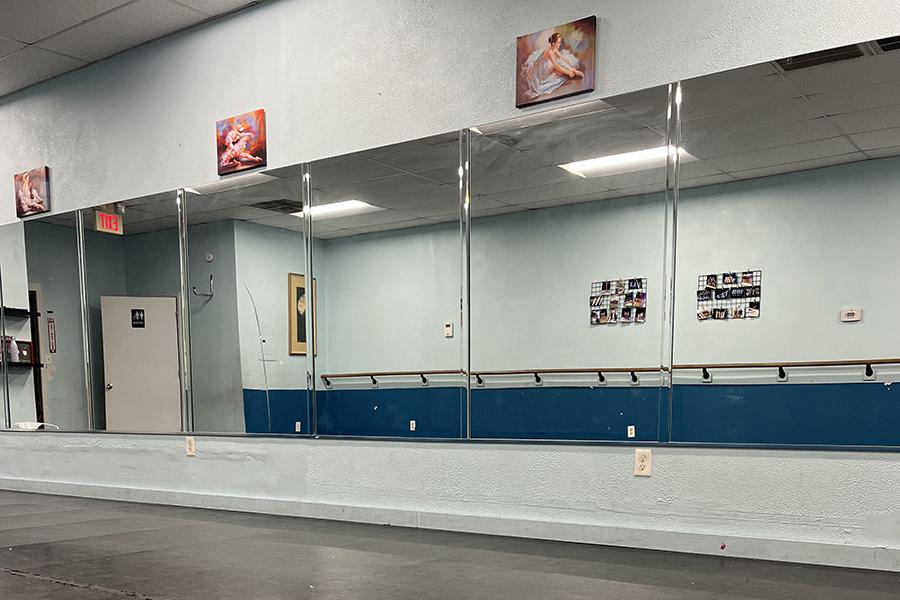
Dress code, the wall of mirrors and costumes can add stress for many dancers. An average dress code is a leotard and tights, but it varies depending on the studio or style of dance. It could also look something like a tank top and leggings. Regardless, most of the time dancers wear tight-fitting clothes to showcase the lines and performance of their body.
That tight clothing can sometimes cling to uncomfortable spots.
Sophomore Janell Sawyer described how she often feels at dance.
“Everyone is always looking at you and you can’t cover up in certain places,” Sawyer said.
Mirrors reflecting back on a dancer’s perceived “imperfections” can also cause an uncomfortable feeling. Dancers are known for having high standards of beauty. For decades, the pressure has been on dancers to look a certain way: tall, lean and not too muscular.
There’s obviously some benefits of dancing in front of mirrors. Freshman Sydney Whitehurst mentioned how if her mind slips on the movement, she can direct her eyes to the mirror and find a dancer doing the correct combination.
However, not all dancers feel the same about mirrors. One dancer at a local studio shared her uneasy relationship with her reflection: “Everyone being in tight clothes and staring at the mirror is very hard sometimes.”
Costumes are another big part of the dance industry. Whether it’s sparkly sequins or a simple two piece, because the dancers are all in the same costume, it can become easier to compare and contrast their looks.
“Everyone’s in the same thing, but everyone has a different body, so it really reflects,” another dancer who wished to remain anonymous shared.
Dancers are constantly being judged on their body and the way it performs. If you’re in something uncomfortable or feeling insecure, you’re not going to do your best – you will spend more time covering up and hiding than dancing and performing.
Whitehurst also mentioned how important it is to feel comfortable in your dance costume.
“If I don’t like how I look, I don’t dance how I usually do because I tend to change to make the costume fit better,” Whitehurst said.
Creating a place where dancers feel safe, validated and free of judgment is a challenging task. Davis described the difficulty of helping someone realize they have a problem with body image.
“It is like pulling them down a path that they don’t want to go down,” Davis said.
Sarah Hallas, a teacher at Island School of Dance, tries to normalize and create a safe place for dancers.
“(It’s important to) refer to everyone as dancers, or athletes, and try to emphasize more on everyone’s strengths,” Hallas said. “We are different for a reason. Life would be boring if we all looked the same and performed the same.”
And it’s worth remembering that studios aren’t the only places in a dancer’s life with mirrors. Body image issues are alive and well in school and on social media in today’s society, which is why educating people about realistic beauty standards is so important today.
“Confidence absolutely starts at the foundation,” Davis said. “If you are insecure of yourself at home, how can you expect to feel secure in a leotard at a dance studio?”
Freshman Ella Heath wrote this story for her Intro to Publications semester project. She can be reached at HeathEl2294@daretolearn.org.
