









By Maya Gargol, Special to Nighthawk News
Shaking their finger furiously in people’s faces, screaming at the top of their lungs, pushing pupils until they can’t take the pressure any longer.
That’s one image of a coach. But here’s another:
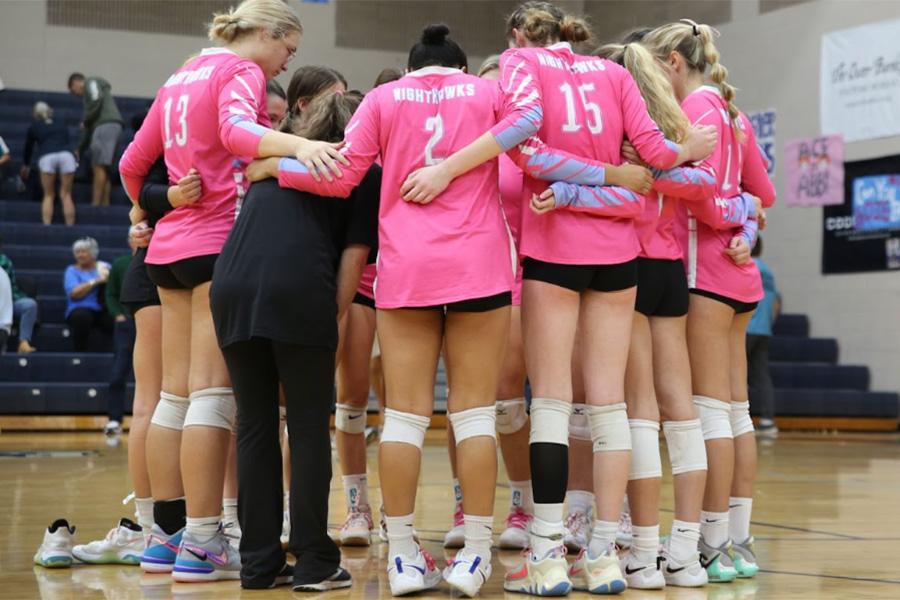
Huddled up with their team on the sidelines, enthusiastic high fives, hugs on Senior Night.
A coach is many things: a mentor, a teacher, a role model, even a lifelong friend. They’re the type of person who can be one the most influential adults for a young athlete. They impact the lives they become a part of.
“I definitely want to be a good role model in life as well, and I hope they carry what they learn on the court to how they can apply it in life,” volleyball coach Anna Zappulla said.
After finishing her volleyball career at FFHS, Zappulla never thought of being a coach. But the longer she helped a friend coach, the more she began to like it. Throughout her life, she’s never had a bad relationship with a coach. When thinking back, Zappulla only thinks of people who she looked up to and can use as an example, even using some of the same drills and techniques she learned from those previous coaches.
Zappulla only prioritizes one thing: Respect.
“My core value is probably respect overall and learning respect for each other. If you can’t be respectful, then it’s really difficult to work with somebody,” she said.
While picking up different values from different coaches, Zappulla learned that that’s what it was all about. Whether it’s to your coach or your peers, learning how to be selfless on a team and respecting the people around you is the real goal. She makes sure to respect her athletes and hopes for the same energy back.
“That’s what a coach is really supposed to do, respect your decision,” senior JJ Summerton said.
Even if that choice is a difficult one, such as quitting soccer to focus on lacrosse, like Summerton did this year.
It might be sad to let go of a sport you play, but it can be harder to let go of the relationships you create through it, especially with your coach. When the coach-player relationship gradually turns into a friendship, it’s even harder to say goodbye.
Players know their coaches will always be there for them, and many players return that idea. Take a look at football coach Jim Prince, for example, having former athletes of his come to his last game coaching, or Zappulla having hers come visit her in practices, making sure to say bye before they go off to college.
Your coach is there to help you along the way, however long or short your athletic career may be. Before heading off to play college volleyball in two years, junior Sadie Wilkinson shared what she is looking for in a coach.
“Not having favorites or just treating everybody the same and being encouraging,” said Wilkinson, who has played for numerous coaches both in high school and on travel teams. “It’s OK to blow up at your team if they deserve it, but if they’re doing good and they obviously need a little pick me up, just being able to read the room and figure out what they need to help them out.”
Coaches who focus on positive, personal relationships with their athletes build trust with players young and old, and on teams that win games and struggle at times.
“I’ve trusted them a lot more and they put more trust in me,” freshman Maddy Beatson said of her relationship with her volleyball coaches.
That coach who shows faith in you to serve as team captain. Who motivates you with just a glance or a few quick words. Who never stops learning from others in the coaching profession. Who steps back and lets the spotlight shine on the players. Who is a role model, mentor and friend all rolled into one. Your coach is only there for a chapter of your life, but will make a lifetime impact.
As the Rev. Billy Graham once said, “A coach will impact more people in one year than the average person will in an entire lifetime.”
Freshman Maya Gargol wrote this story for her Intro to Publications semester project. She can be reached at GargolMa3183@daretolearn.org.
