













By Ella Ogburn, Staff Writer
According to Oxford Languages, autism is defined as “a neurodevelopmental condition of variable severity with
lifelong effects that can be recognized from early childhood, chiefly characterized by difficulties with social interaction and communication and by restricted or repetitive patterns of thought and behavior.”
That is a complicated definition to understand, and it’s also important to note that autism varies from person
to person. That’s why every April is marked as Autism Awareness Month. Autism Awareness Month gives autistic people outreach and resources to support their autistic peers and provides opportunities for everyone to understand the autism community.
Being autistic comes with many people making assumptions, often- times about emotions and empathy. People with autism frequently face the misconception that they don’t have feelings or have a lack of empathy.
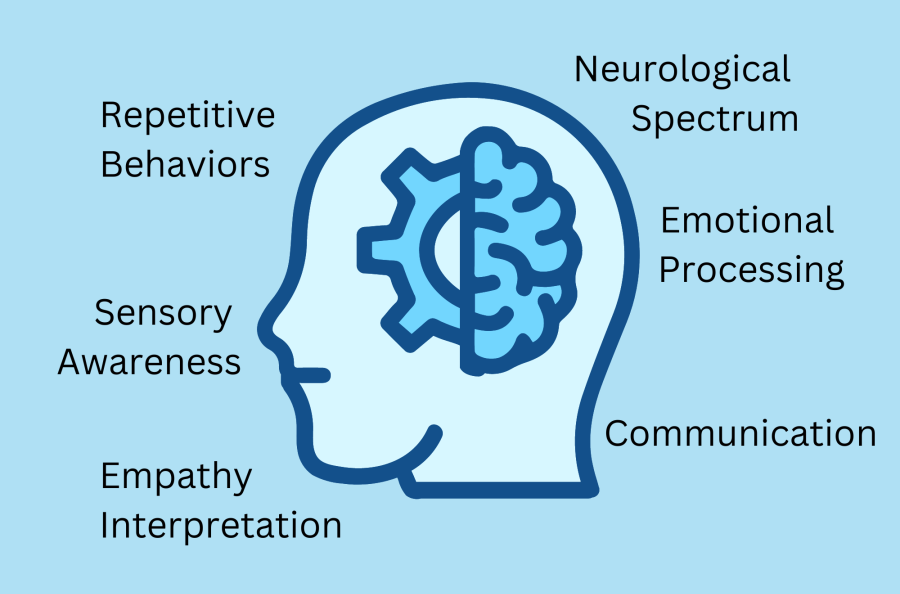
Autism can heighten sensory awareness and repetitive behaviors, while also being the root of difficulty with social awareness and communication. Misguided peers may mistake these traits as not having the ability to form connections or meaningful relationships with others.
Another widespread misconception is that autism is a mental health condition when it is actually a neurological disorder. While many people might see the need for a cure to autism, autism cannot be cured and has no need to be.
Autistic people are often grouped together, when in reality autism affects each person differently. First Flight High School guidance counselor Amy White noted that the key to supporting students with autism is understanding them individually.
“I think that sometimes the misconception is that (autistic people) will look the same or have the same behaviors, but each person is different,” White said.
Every student, schoolwide, is different and has their own set of proficiencies and skills. Some autistic students may just need a little extra support.
“They may need a little bit more direction on certain behaviors or prompting to do the work or even assistance with the work,” White said.
Sam Iulo, the NC Extended Content Standard Exceptional Children’s Teacher, also explained that autism varies within each individual.
“It is important to recognize that they do want to fit in but it is really tough for them to figure out how,” Iulo said. “Many of them are aware that they do not fit in and it affects their mental health as they get older. Every person has a gift and deserves a chance to be recognized and appreciated for their differences.”
People like guidance counselors and specialists such as Iulo work with students with autism in a variety of ways, including working with faculty to create a team that is supportive toward the specific student. The goal is to lift up those students’ abilities.
However, White notes that sometimes they run into issues.
“I think the mistake is misunderstanding the student. They need to understand the students and what their needs are. Every student is different – that is the most important thing I’ve learned,” White said.
Iulo said she uses many different techniques to work with and support students, including focusing less on verbal instructions and more on gestures and written schedules. Iulo added that learning students’ interests also encourages communication.
That goes for students in the halls as well as the staff members who work with students with autism.
“People with autism have so much to offer to the world. We can learn so much from them if we just change our expectations and let them lead the way,” Iulo said. “I hope that Autism Awareness Month helps everyone remember to embrace people for their differences every day instead of judging them.”
Awareness brings acceptance and appreciation, White added: “Getting to know someone with autism and working with them, helping out – I see a lot of students that are very supportive.”
Autism is defined individually. The boundaries impact each person differently. Not every autistic person is a savant with low social communication. Not every autistic person is high functioning with heavy hyper fixations.
“We are all human, we are all unique individuals, and everyone should be accepted for who they are,” Iulo said.
Sophomore Ella Ogburn can be reached at 25ogburnel65@daretolearn.org.