















By Chloe Creef, Special to Nighthawk News
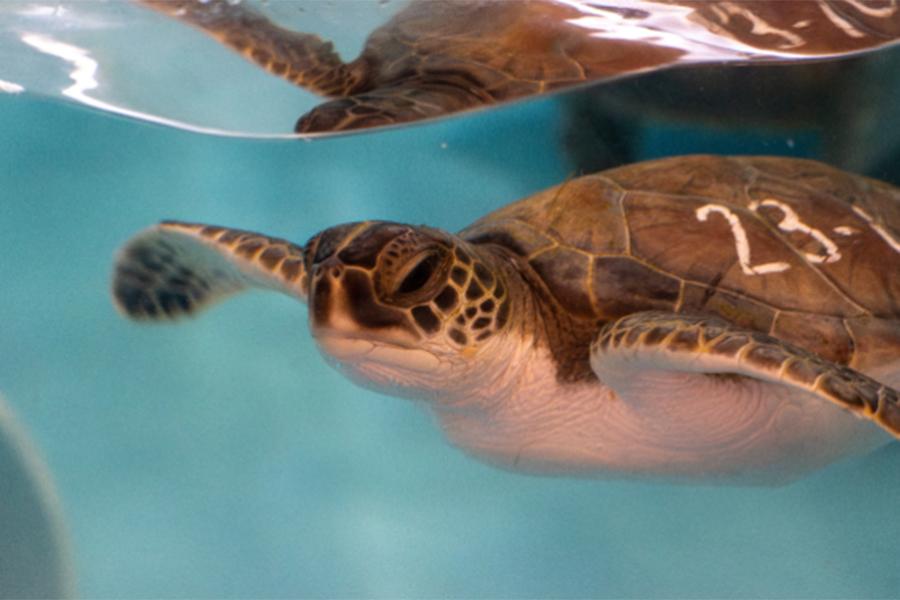
You’re walking on the beach one day enjoying all the regular sights and sounds as the waves crash and the breeze blows through your hair. Then, out of the corner of your eye, a flash of yellow catches your attention. As you approach the square of caution tape on the beach, you excitedly realize you’ve found a sea turtle nest!
What should you do if you find a sea turtle nest? Leave it alone – don’t mess with the nest, the eggs or any turtles that may be nearby. People who work for the Network for Endangered Sea Turtles (N.E.S.T) or other sea turtle rescue organizations have taped or blocked off this area for a reason. Sea turtle nests are very delicate things and need to be observed from a distance only.
A few of the things that can happen to people who mess around with nests on the Outer Banks include fines that can go up to $25,000, and even jail time of up to six months is possible.
On the occasion you find a sea turtle nest that is not taped off or there aren’t any precautions around it you can always call the N.E.S.T. 24-hour hotline at 252-441-8622 or contact another sea turtle save and rescue program, such as the STAR Center (the NC Aquarium on Roanoke Island’s Sea Turtle Assistance and Rehabilitation Center) or the Marine Mammal Stranding Network.
For anyone who wants to try to get involved with helping sea turtles, there are several things you can do! First off, volunteer work or internships are always a great way to start off and working your way up to get into a preferred profession.
“Internships are key in this field and if you want to work with a specific animal,” STAR Center manager Amber Hitt said.
Two students who have volunteered or are currently volunteering at the North Carolina Aquarium on Roanoke Island did not get to work directly with sea turtles, but they still got the experience of working with marine animals.
“I helped with the stingrays and I help people learn new things about them,” sophomore Minna-Kate Thomas said. “Then I also did some information carts about otters.”
Volunteering or interning places also gives you the opportunity to get to know new people.
“I knew one person, but a few people that volunteered there, I became friends with and they go to our school currently,” junior Alexander Tine said.
Of course, to go more in depth in the field of saving sea turtles or rehabilitating them, you will need to do more than just volunteer or intern somewhere.
“I have a bachelor’s degree in psychology and a master’s degree in post-secondary education,” Hitt said.
Plenty of volunteers of all ages still find ways to get involved with saving sea turtles. Camie Romano, who runs the internship programs for FFHS, has been working with N.E.S.T. for years.
“To become a volunteer, you have to go to the Network for Endangered Sea Turtles website and fill out a volunteer application,” Romano said. “Then once you do that, they put you on an email list and you sign up for the different training, which includes nesting response, which is before the summer season. I started training several years ago, so you can’t get into it right away.”
For those who don’t want to volunteer or work for a program but still want to help out, a few of the ways to prevent sea turtles from being harmed are cleaning up after ourselves: trying to reduce our use of plastics, recycling as much as possible, and just trying to keep pollution off of the beaches.
“My family and I clean up the beaches whenever we go, we do not use plastic straws, and we make sure that we only leave our footprints on the beaches,” Hitt said.
Sophomore Chloe Creef wrote this story for her Intro to Publications semester project. She can be reached at CreefCh3187@daretolearn.org.
