








By Katie MacBride, Editor-in-Chief
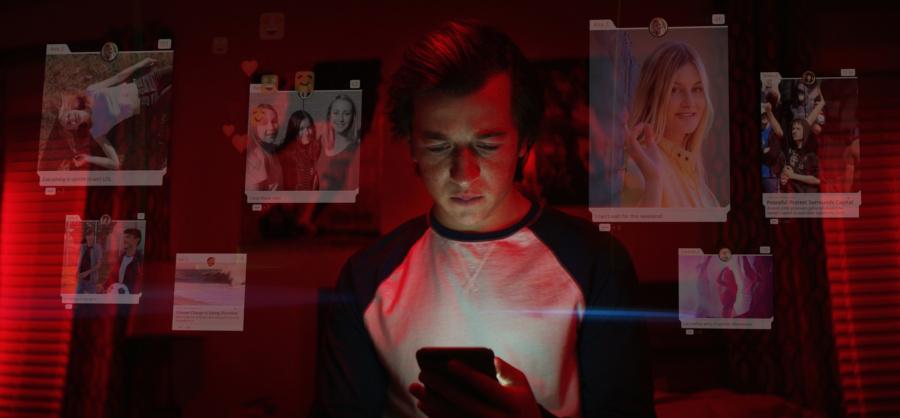
The new 2020 Netflix film, The Social Dilemma, is a ‘documentary-drama’ that discusses the dangers that social media and networking have implicated into society. Experts and former members of Google, Facebook, Instagram, Snapchat and many others go into detail about how the purpose of these networking systems have changed over the years, and why these former members are former members.
These experts also explored and explained how these platforms work, and how small aspects that the companies have embedded into their programs, that we think to be normal, such as notifications and display work to get users attention.
Yes… that might seem silly, ‘notifications are used to get our attention.’ But the reason behind notifications and the different types of notifications are highlighted by the documentary, and how these small aspects have engulfed users’ attention, time, emotions and lives.
By obtaining users’ attention — getting you to continue scrolling through your feed, keeping you watching ‘the next’ recommended video, having you select posts that then take you to another section of posts — these platforms are getting exactly what they wanted. Capturing users’ attention is what runs these programs.
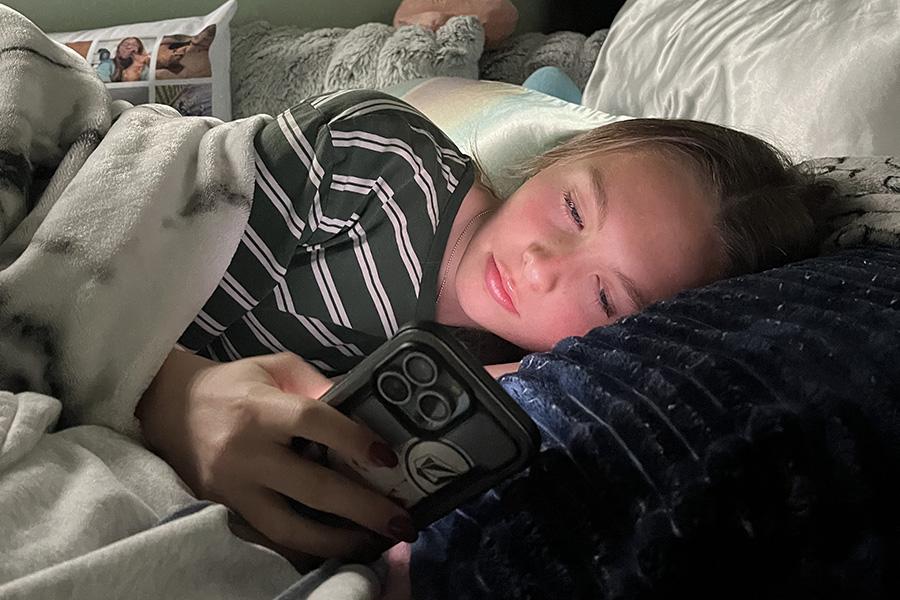
They have established a dependence between users and the programs. They have created the normality reaction of reaching for your phone every time it buzzes or dings.
After watching this film, I found myself thinking about the disturbing connection between social media and my daily life. In the midst of online and hybrid school, we are required to use the Internet and many platforms that were discussed in the documentary everyday. As I scrolled through my Gmail, Google Classroom and Google Docs looking for messages from teachers and assignments, my thoughts tended to linger back to the show.
I thought to myself… how is it that society has programmed us to rely on these platforms and networks everyday, but it is dangerous for our wellbeing?
The answer, these programs were created with positive intentions: to make life easier, keep people connected, improve access to information, expand education and give people gateway access to a variety of different programs. But some of the unintended factors of these programs are harmful, such as increased rates in teen depression and anxiety, decreased rates in kids self worth, increased rates in identity issues, increased rates in fake news and many others.
According to documentary featured, Social Psychologist and author, Jonathan Hadt, PhD, from NYU Stern School of Business, ‘U.S. Hospital Admissions for Non-Fatal Self Harm’ has increased 62% in girls aged 15-19 and increased 189% in girls aged 10-14, since 2009. And the same is true for ‘U.S. Suicide Rates’: 20% increase in girls aged 15-19 and 151% increase in girls aged 10-14 since 2009.
Hadt also included that these increased rates in self harm and suicide point to ‘socail media avaibale on mobile’ which was in the year 2009.
This detail from the film was only one of several aspects that made a wave of sadness rush through my body. This documentary opened my mind to a vast amount of feelings, thoughts and ideas.
One in particular was how deeply these programs manipulate our thoughts, and control us and our actions. For example, the documentary describes the time when ‘#PIZZAGATE’ (the pizzagate conspiracy theory) that went viral in 2016 and was even propagated throughout Facebook. Documentary featured, Stanford Internet Observatory Research Manager and Data for Democracy Former Head of Policy, Renee Diresta, described the pizzagate conspiracy as “ordering a pizza meant ordering a trafficked person.”
Diresta explained that as these pizzagate groups got bigger, Facebook’s recommendation program started to ‘suggest’ to users, who showed Facebook in some way (search history, videos or posts they have liked) that they believe in conspiracy theories, these pizzagate groups. This then caused a man to show up to a Pizzeria in DC with a gun. He believed he was going to try to free children that he believed were locked up in the basement of the Pizzeria — there was no basement or children.
This scenario seems like something you would see in a movie. It seems almost far fetched, but it happened. And this is what is so scary about these algorithms that social media programs use to recommend videos and posts to their users.
The fact that devices, social media, and all the networking, communications and computer programs can have such a strong impact on society that it causes people to alter their beliefs, behaviors and their thoughts about themselves and others is what is so dangerous. The overall societal impact of these programs is something that we should all really think about.
So, watch The Social Dilemma. Learn about the depth and complexity of the secrets that go behind social media and networking. Think about your screen time. Think about if you should really watch that video Instagram or Facebook ‘suggests’ for you. Make sure you are watching and reading real news, and learn how to identify fake news. Question everything.
If you would like to learn more about The Social Dilemma here is a link to their website and/or watch the documentary on Netflix.
Senior Katie MacBride can be reached at 21macbrideka62@daretolearn.org.