















By Emma Braithwaite and Allie Nigro, Editor-in-Chief and Online Editor-in-Chief
New uniforms, working equipment and fresh paint on the fields. All crucial to one of the biggest parts of a student’s high school experience. Most people focus on the wins and losses, fun memories and life lessons that come from playing a sport. But where does the money for high school sports actually come from?
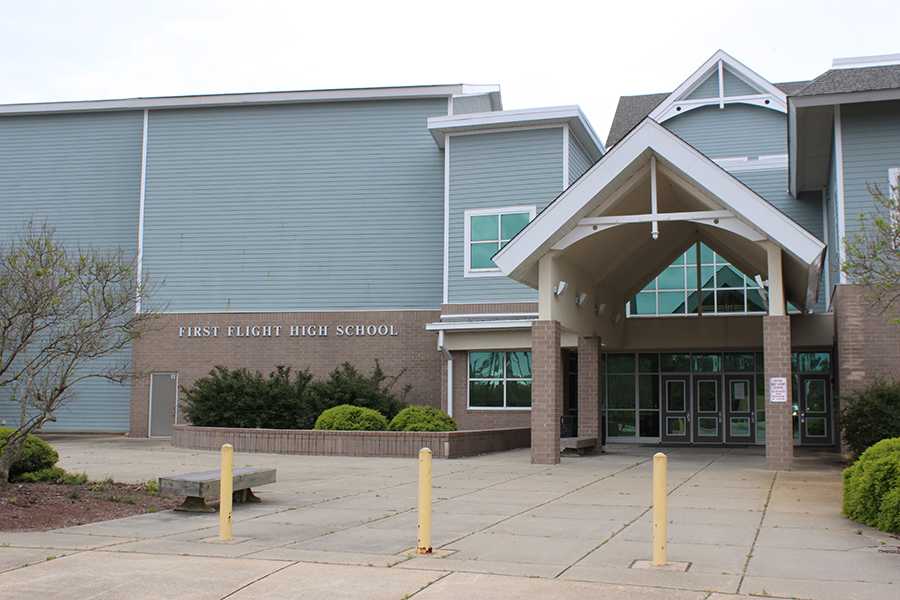
Each year, First Flight High School is allocated an athletic budget to cover all school sports. This money comes from the Dare County Schools budget and is then managed by the principal and athletic director.
“One of the biggest things for me to consider is what our schedules look like,” Athletic Director Chad Williams said. “After I get my budget from the school district, everything else is driven by ticket sales, and what we make at the gate.”
Though many teams generate revenue, such as the football and basketball teams, this money goes right back into the athletic budget and is not necessarily used for the team itself.
“The basketball team generates way more than they would use,” Principal Chuck Lansing said. “So a lot of the money they generate on a Friday night ends up going towards our golf and tennis teams in the spring.”
There are a lot of costs that come with each team, as well as some main expenses.
“The athletics budget is absolutely eaten up by referees, travel costs and field paint,” Lansing said. “It’s crazy expensive.”
When it comes to officials, most sports have two working each game, while basketball pays three refs and football has five. Even sports like tennis and golf that don’t have referees have the high costs of travel: Every road trip an FFHS team makes comes with the cost of a driver and fuel. DCS uses a per-mile formula to cover bus expenses, so a trip to Manteo is much less expensive than a visit to Hertford County. That’s another challenge for the athletic budget in a conference with schools that are so spread out.
Each sport comes with its own unique expenses. Swimming, for instance, pays to use the Outer Banks Family YMCA for every practice and meet.
As the athletic director, Williams works closely with the coaches, making sure each team has what they need. He tries to honor every request the coaches come to him with, but also stresses the difference between needs and wants.
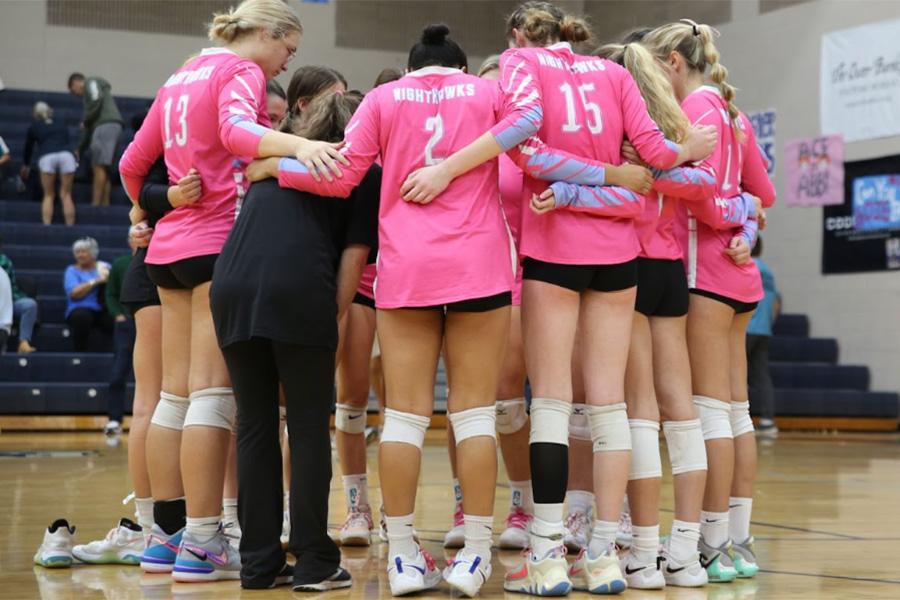
“We are on a formula where teams get new uniforms every four years,” Williams said. “Every kid who plays a sport at First Flight High School, if they play for four years, should have a new uniform at some point in their career.”
When it comes to “extras” that a team might be looking for, other funding outside the school athletics budget might come into play.
“The coaches here have been really good about understanding that we do have a limited amount of money,” Williams said. “They’ve gone out and done some individual fundraising on their own if there’s something they wanted to do above and beyond.”
Although the athletic budget never goes into an individual teams account, money that they raise does.
“The teams raise money that goes directly into their account, and then they can do with that as they wish,” Williams said. “A lot of things get purchased by the teams themselves that people think are purchased by the athletic department.”
Furthermore, teams work with the First Flight High School Athletic Booster Club, which raises money to give back to the athletic programs.
“We have a grant and I will try to meet with all the coaches at the beginning of the year,” Booster Club president Jean Freeman said. “They have to get two or three estimates and have to tell us why. Then it goes to Chad to say ‘yes they need this or no’, then it comes to the board of the booster club, and then the coach comes and presents it to the board.”
There is a common misconception that the booster club allocates the majority of its funds to the “popular sports” that have the most fans at each game. In reality, however, almost the opposite is true.
“The one perception that’s out there that is simply not true is that all the money goes to football and basketball,” Freeman said. “In the past five-plus years, I don’t think basketball has come to us. Football came to us for the first time in 10 years for one thing.”
The money is issued among the teams based on need. Whoever comes to the booster club asking for funds receives it instead of each team having a set amount of money.
This year, the cheer team obtained new cheer mats for its after-school practices in the rotunda, just one example of how teams can raise money and work with the booster club.
“The mats that they had were from when the school opened,” Freeman said. “They were starting to come apart and I was worried for the girls if they’re jumping and the velcro to keep them together came apart, they could have sprained their ankle. So we did contribute to that.”
Although it’s not always easy to keep every player and coach on every team happy, Lansing stressed the importance of focusing on what the Nighthawks do have.
“We always want more, but I think when we travel to other schools we can all agree on how much we have, and that in a lot of ways we’re fortunate,” Lansing said.
Senior Emma Braithwaite can be reached at 23braithwaiteem06@daretolearn.org.
Senior Allie Nigro can be reached at 23nigroal20@daretolearn.org.
