




By Arabella Saunders, Editor-in-Chief
On the Outer Banks, we are small-town people. We are Sunday-afternoon-sea-glass-hunt people. Hurricane-relief-fundraising people. Far-too-excited-about-Publix’s-grand-opening people. Fourth-of-July-fireworks-and-tie-dyed-shirts people. We are the small-things-in-life people.
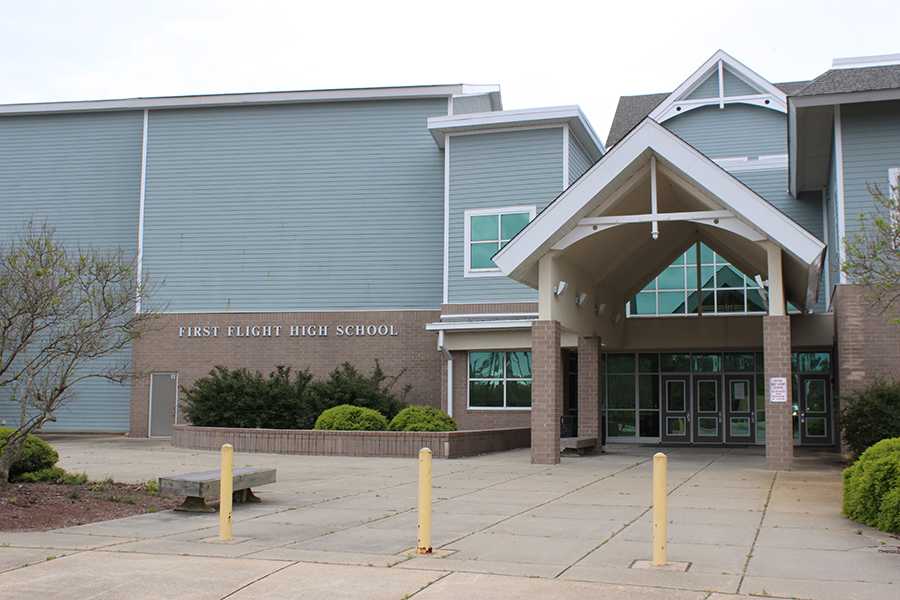
But planning and participating in First Flight’s #Enough: National School Walkout has forced me to realize that no matter how small and seemingly idyllic my home is, the Outer Banks is not exempt from the hateful side of people.
Talk of a walkout at FFHS began less than 48 hours after the Parkland shooting. It started with an Instagram account created by an anonymous high school student. The student was planning the demonstration for April 20, in line with the National School Walkout spearheaded by 15-year-old Lane Murdock. We, as concerned students, were interested.
We had seen the footage of Marjory Stoneman Douglas High School students fleeing their school that February morning, hands thrown above their heads in a twisted kind of surrender. We had watched the heart-wrenching interviews with boys and girls breaking down in tears while describing their best friends being shot and killed in front of their eyes. We had gaped at the photos of parents crumbling to the ground, clutching their chests and crying out for their dead children.
Though impactful, those heartbreaking images were not what grabbed our full attention. Rather, it was the chilling realization that the comforting yet foolish phrase “that could never happen here” was no longer viable.
Some kind of action seemed necessary, but April 20 was over two months away.
And in those 48 hours after Parkland, I began to ask myself, “What’s next? And how will I play a part in this movement?” My question was answered with a newspaper story and a routine fire drill the following afternoon.
The fire drill came first. I was in the cafeteria when School Resource Officer Billy Essick told us about a drill. “Lock down?” I asked, assuming that was the drill he was referring to. “Routine fire,” he said. Seconds later, the alarm sounded and I scurried outside.
It wasn’t until fifth period that day that I realized the significance of that drill. The drill was routine, yes, but an error in the school’s email system had left students and teachers in the dark. With the absence of notification about this drill, some of my classmates weren’t just unprepared, they were terrified. The tragedy that took place in Florida just days before had began with what students and teachers believed was a fire drill.
In those moments after the alarm sounded at my school, many of my peers later told me they sat frozen at their desks, anxiously asking their teachers if this was planned. They said their eyes went wide and their lips pursed taut and they grabbed the hands of their best friends, silently asking themselves, “Are we next?”
Thankfully, we were not.
The schoolwide fear surrounding the fire drill coupled with the discovery that I had a personal connection to the Parkland shooting caused me to pen an opinion story for NighthawkNews.com. I wrote about a young girl at my dance studio whose 18-year-old cousin, Meadow Pollack, was shot and killed at Marjory Stoneman Douglas. The story was so well received by my peers and members of this small-town community, I planned an interest meeting on gun violence for concerned students during study hall. I spread the word via Twitter.
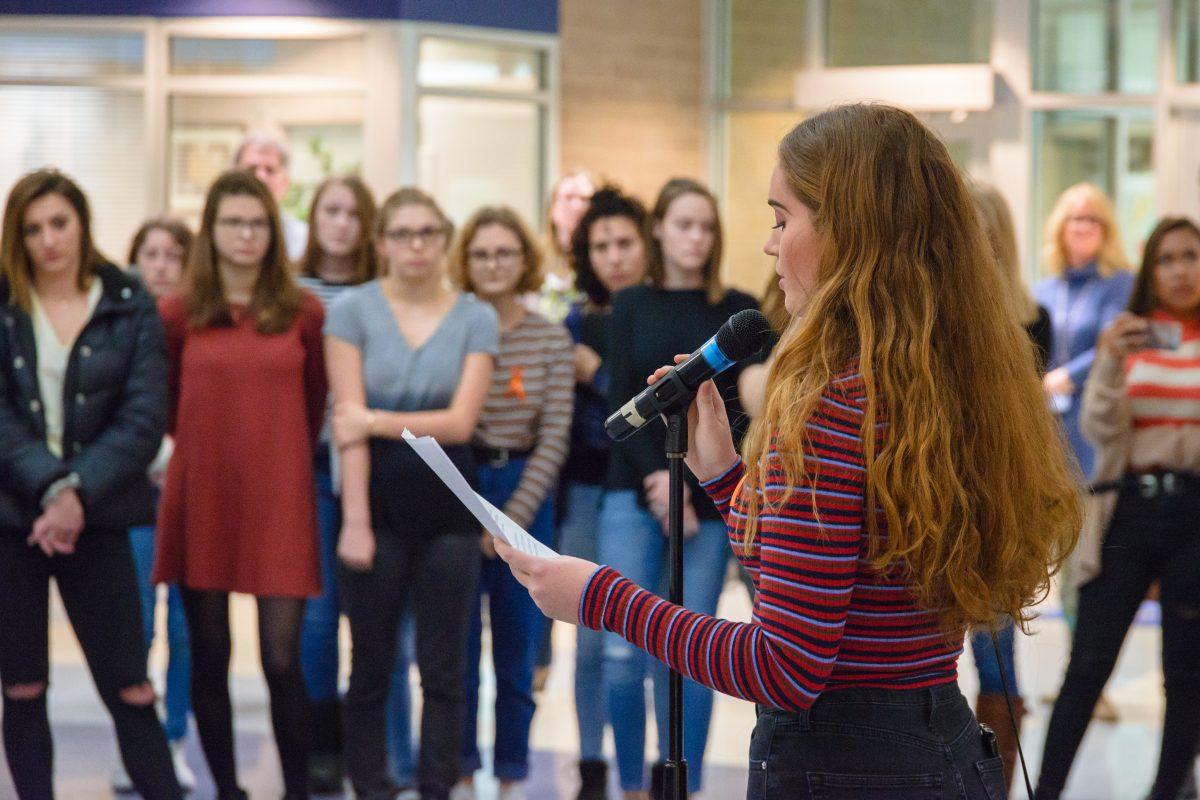
On Monday, Feb. 26, I gathered in a classroom with 30 other students. Together, we decided to participate in the national event scheduled for March 14 and began planning. By the end of the meeting, we had chosen to hold the walkout inside our school’s rotunda and agreed to seek support from our school administrators. The following afternoon, Leslie Jennings and I met with Principal Tim Albert, who welcomed our idea for the walkout with open arms.
Using ActionNetwork.org, I created an online event page for the walkout that would allow students to RSVP. I shared the link to the page all over social media and watched as other students did the same. In the first five hours, over 60 people pledged attendance – I was thrilled.
But then I received a text from Leslie: “Check OBX Locals Facebook group,” it read.
The text included no further description, but seconds later, I knew I had come across the correct post. In roughly 15 sentences, a middle-aged Outer Banks resident expressed his thoughts on the proposed April 20 walkout.
“Don’t these kids realize that 4/20 is smoke weed and get high day? How can they expect anyone to take them seriously?”
I was appalled that this man, who had taken all this time to pen such an outrageous post, had failed to do a quick Google search and learn that the proposed April date was also the 19th anniversary of Columbine. Then, I checked the comments. As I sat there scrolling, I grew stiff with an unsettling mix of sadness and rage.
They were cruel. They were bitter. Some were threatening. All were charged with a divisive tone similar to that of the political state of our nation today.
I fired back. In 315 carefully chosen words, I explained the reasoning behind the date of the April 20 walkout, and the details of the walkout I was planning on March 14. I expressed my concern for my safety in school, my appreciation for the adults who had supported us students thus far and my disdain for those who resorted to belittling us.
Eventually, I logged off. But I was still uneasy – my hometown wasn’t this safe haven isolated from the cruelness of society like I had been raised to believe. Those people who I was told would discourage me from standing up for myself weren’t just “out there in the real world,” they were right here in my backyard.
Nevertheless, I continued planning the walkout. I contacted potential student speakers for the demonstration. I set up a workshop during study hall for students to send letters to their representatives. I kept sharing news about the walkout on social media.
At 10 a.m. on March 14, I stood in front of over 600 of my peers and teachers and delivered a four-minute speech about my response to Parkland.
The entire 17-minute demonstration was live streamed on Nighthawk News’ Facebook page and has now been viewed over 9,000 times (not bad for small-town). The hundreds of comments on the post are positive – thanking students for speaking out, praising administration for being supportive.
On another local news source’s Facebook page, an article about the walkout had been shared. Many comments there, however, are not as encouraging, including this one from a local woman.
“The same kids that walked out of classes today are the same kids that disrespect their parents and those in authority…smh at babies trying to run the country – get your butt back to class and graduate.”
This time, I did not fire back. I read a few comments, promised myself I would never let the world make me bitter, and logged off.
Planning and participating in this walkout has instilled in me the importance of using my voice despite others’ judgments. There will always be others in opposition to your cause. There will always be people who believe your age defines the validity of your voice. There will always be those who push while you pull.
But it is movements like National School Walkout that give people everywhere a voice. It is students like the survivors of the Parkland shooting who are facing backlash from all sides in the midst of their grief and are still prevailing over their opposition – and inspiring others to do so as well. It is people like the supportive community members on the Outer Banks of North Carolina who maintain my faith in this small town, and give me hope for my future.
The National School Walkout is only the beginning of a movement that grants young people a powerful voice. Onward and upward.
Senior Arabella Saunders can be reached at saundersar0214@daretolearn.org.