
















By Katie MacBride, Staff Writer
Ding, ding. A student email notification pops up on the screen. The message has the importance of a school alert and includes a link at the bottom of the message. Curiosity compels the student to click the link to figure out what the buzz is all about.
Unaware that the email is a hoax, the student has opened a link that sends information to a scammer and provides access to the email account.
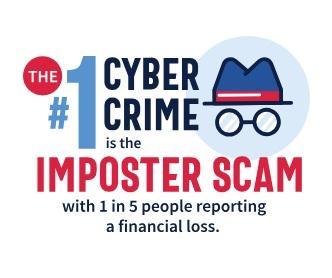
Expanding technology usage in schools exposes students to online scams and catfishes, problems that are increasing in society’s digital age. With increasing online communication and many ways to be scammed, it is important to know what to look for and what to do if scammed.
In teacher Nancy Stevens’ Advanced Placement and Intro to Computer Science courses, they discuss “phishing.” Phishing is the practice of someone sending an email that looks like it is from a credible company in order to capture people’s personal information. It is the most common practice scammers perform. There is not a lot of information an individual has to decide if it is a scam or not.
“Those schemes are prevalent,” Stevens said. “I just read that 90 percent of scams online involve email because through email all you have is a sender, receiver, and we really don’t have a lot of information to go by.”
Despite email giving a user limited information to go by, there are other things to look for when receiving an email or browsing the web. To help see legit websites and also keep up with the latest scams, checking the URL and using fact-checking websites like “Snopes.com” are useful. Looking for grammatical errors and using logic to decide whether a deal is too good to be true is another way to help prevent getting scammed.
“There are some serious things that everyone should be aware of when you are on a device and you are going to a website,” Stevens said. “If you see “https” (in the URL) you are using a secure protocol, (meaning) there is some sort of digital certificate that is verifying that that site is who they say they are.”
Individuals should also have an open mind when searching the web. Stevens constantly asks students to question anyone and anything online.
“When we are communicating through digital media, computer, phone, laptop or whatever, we have a limited amount of information to base our decisions (of what we find believable) upon,” Stevens said. “The scammer only gives us the information that they want, which is part of the con.”
If the online user doesn’t notice any of these indicators and gets scammed, the individual should change their passwords to help prevent any more personal information being given up.
“If (I) gave up some information, I put in my username and password to my email address, or some account, I should immediately go change that password before the scammer changes the password, because that’s what they are going to do,” Stevens said.
Along with email and online scams, social media is another platform where someone can be hoodwinked. Snapchat was a conversation topic for some First Flight students when a scammer tried to catfish an alumnus. One of the individuals whom the scammer contacted was senior Ashley Forbes.
“There was an attempt to catfish me and several other girls at our school,” Forbes explained. “Someone took the name of a guy who used to go here and who most of us know.”
When students were first contacted on Snapchat, there wasn’t much question to who was adding them – they figured it was their former classmate. It wasn’t until the impostor began communicating with them that they knew something was up. Sophomore Samantha Leopardi was first to call the scammer out after she searched for the actual alumnus on Instagram.
“In (the real person’s) bio, (the Snapchat) was not the same as the one that had added me, so I said, ‘What’s your Instagram so I can go look you up and see what you look like?’ ” Leopardi said. “Then (the scammer) gave me that Instagram (of the real person) and I texted them back, ‘Your Snapchat usernames don’t match up.’”
After being called out, the scammer blocked Leopardi. Students started to block the scammer once they realized they weren’t really talking to the right person.
Freshman Susie Hala followed everyone in the blocking of the catfisher.
“I thought it was real because other people had been saying they got messages too,” Hala said. “After I found out that he was a catfish, I just blocked him.”
Despite figuring out the scam, those involved were still left feeling nervous about the experience.
“After I figured out it was a scammer it was pretty scary because the end result could have been really bad and it made me uncomfortable,” Leopardi said.
It’s important to be aware that scams are everywhere and can happen to anyone. To help protect personal information, individuals should take all precautions and question everything online.
“A healthy skepticism is an important thing to develop,” Stevens said.
Sophomore Katie MacBride can be reached at 21macbrideka62@daretolearn.org.