












By Emmy Trivette, Editor-in-Chief
Not the song by The Clash. I’m talking about hurricane evacuations. On Monday, a mandatory evacuation was announced by Dare County after predictions of Hurricane Dorian’s path set the cone of uncertainty on the Outer Banks.
And while disappointed tourists crowded your workplace Labor Day, complaining because they didn’t get trip insurance or didn’t want to make the four-hour drive back to Virginia, you were probably thinking about what it meant to stay.
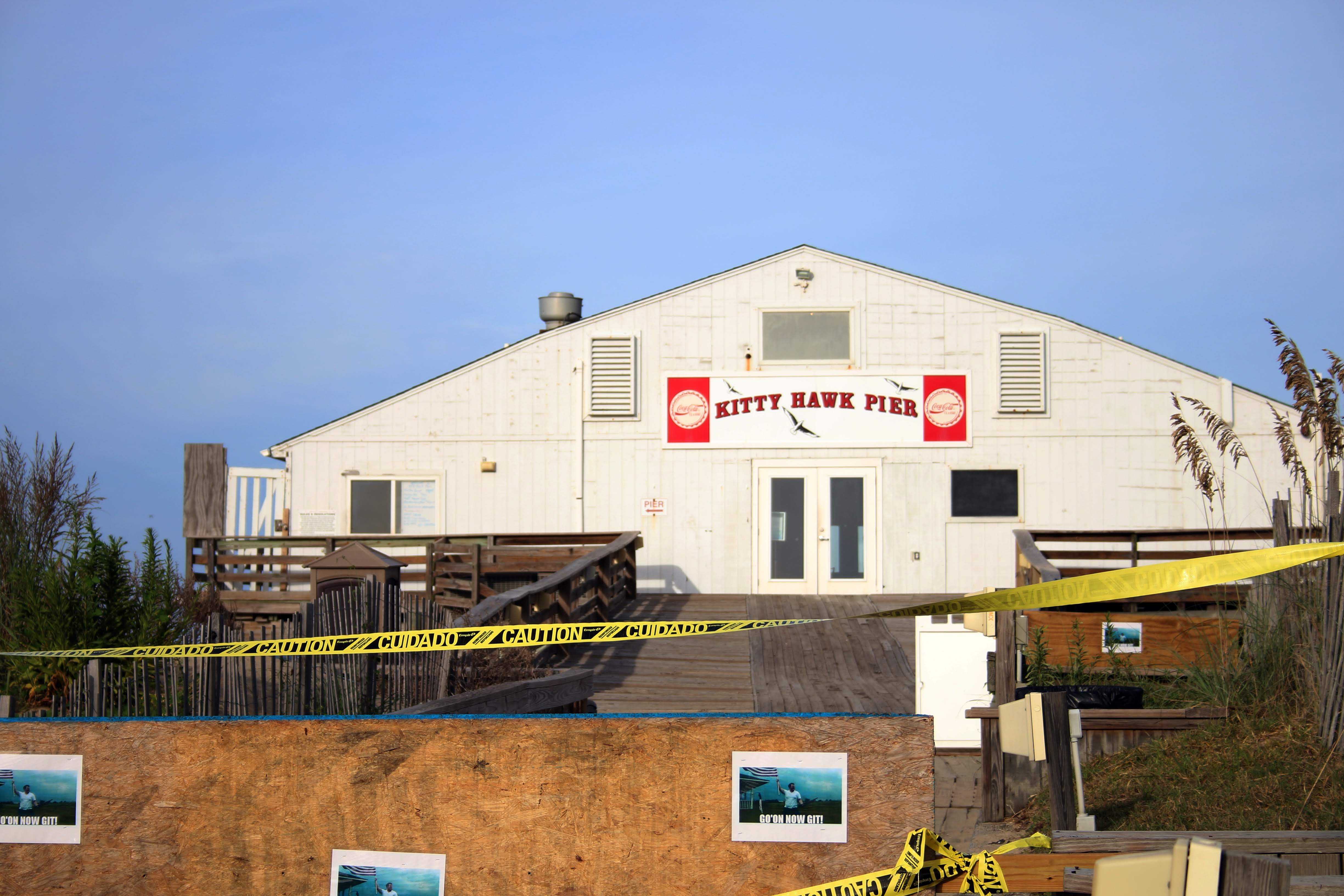
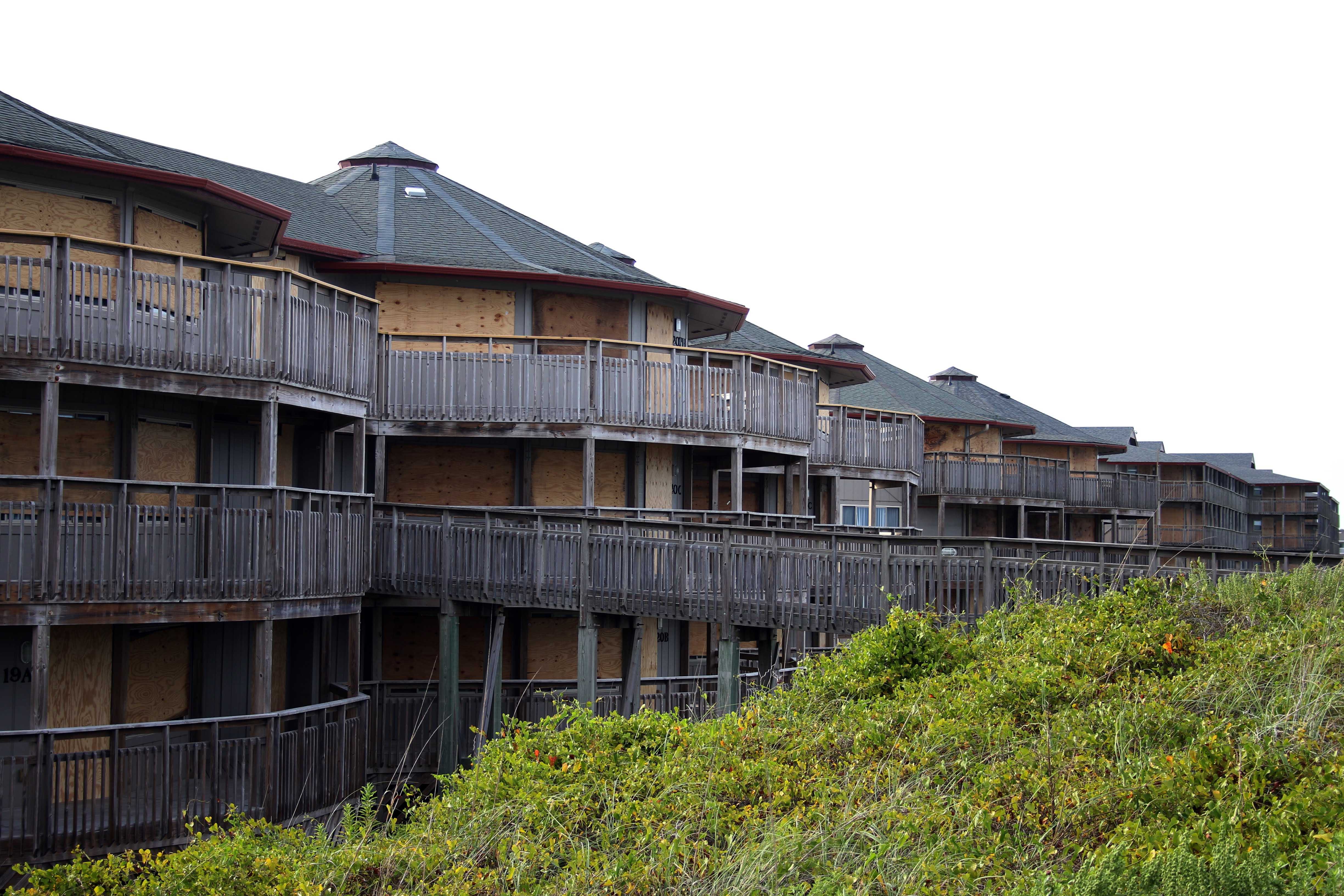
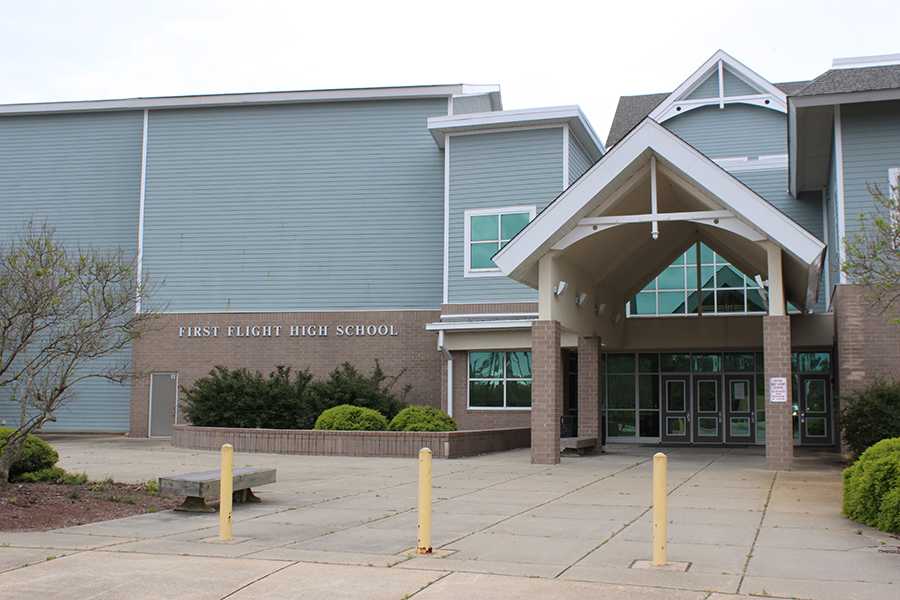
Almost every student at First Flight has stayed through a hurricane. You park your car in the closest neighborhood on a hill, make sure to get your gas before the 7-11 is flooded by tourists on their way out of town, try and conserve your data so you can still Snapchat weather reports to your friends.
It’s easy to think about staying through a hurricane here, when the Outer Banks has been lucky enough to not have even seen a Category 3 hurricane since Fran in ‘96. But if you’ve had the news playing on your phone or TV, you saw the Bahamas.
It clearly wasn’t just a Category 3 that demolished the islands. It was a Category 5 that lingered for nearly two days.
After swimming through stats homework on my first day off for the evacuation, I unplugged for a brief second as my mom called me over to the TV. All I wanted was a snack, but she wanted me to watch the latest from the Bahamas.
At first it didn’t look like anything I hadn’t seen hurricane chasers report before. As sad as it was – bashed-in houses, beaten-down palm trees, scattered cars – it’s not unusual to see anymore.
But then the camera feed shifted to another location.
On screen was an elderly man being interviewed by a reporter moments after his neighborhood was destroyed, after his house was completely flooded – after his wife just drowned. He couldn’t think or process what had just happened to him. All he could do was talk.
You watch the news to stay updated on the hurricane. You want to know how it might affect your home and other places. It doesn’t scare you watching weather reports because it doesn’t relate to you. Even though we’re on the Outer Banks, we’re in a location that stays relatively safe anyway, so what’s to worry about?
Then you watch a human interest story like that and you rethink things a little. Less than a thousand miles away from the place we call home, this man saw his wife drown in a storm of a caliber that could spin circles around what we’re probably going to get. And while you know that our taste of Dorian will be nothing compared to the apocalyptic-like situation of the Bahamas, you start feeling nervous.
Here, locals have a thick skin when it comes to hurricanes, but it’s still unsettling to watch news scenes such as this.
The man, who I later learned was a fisherman named Howard Armstrong, was part of a news story that needs to be covered, however unnerving his story is. And despite my admiration for the journalists who traveled to the Bahamas to record what they saw, despite Howard’s story – I didn’t want to watch the news anymore.
At this point in the Dorian watch game, the storm has strengthened to a Category 3 and is taking out the coast of South Carolina, leaving 73,000 homes without power in its wake.
So while I sit here typing, occasionally looking outside to see if Dorian has started its approach up the North Carolina coast, I’m wondering if instead of writing I should be in my car, driving away.
Senior Emmy Trivette can be reached at trivetteem0626@daretolearn.org.

meg chrisler • Sep 7, 2019 at 7:16 am
This was a well-crafted article, Emmy! I am so sorry and sad that these are the times we are living in and that your generation and ones following will have to deal with the ever-increasing nightmare of climate change.
Donna Roark • Sep 6, 2019 at 5:09 am
Bravo for your honest appraisal of this life threatening situation, Emmy.
Miss Donna, KDH Children’s Librarian
Chloe Futrell • Sep 5, 2019 at 4:35 pm
So powerful Emmy, such a captivating read. I loved it.