








By Lexi Foster, Staff Writer
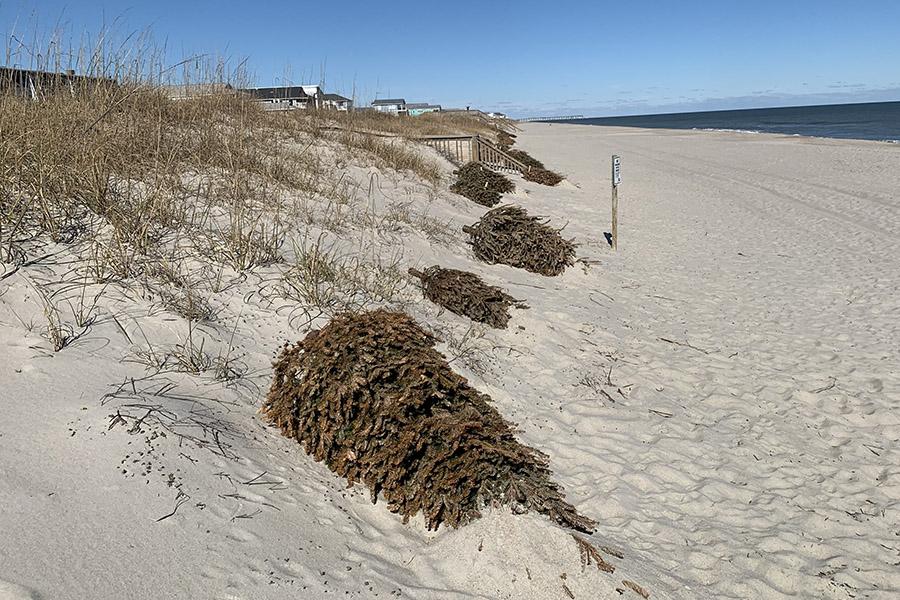
Cigarette butts, plastic water bottles, bottle caps, fishing line, plastic bags and wrappers are a variety of the common non-biodegradable materials left behind on the beach by locals and visitors.
In an attempt to be cleaner and greener, students and faculty pick up trash along local beaches. For some, beach cleaning may earn community service or volunteer hours, while others do it to give back to the community.
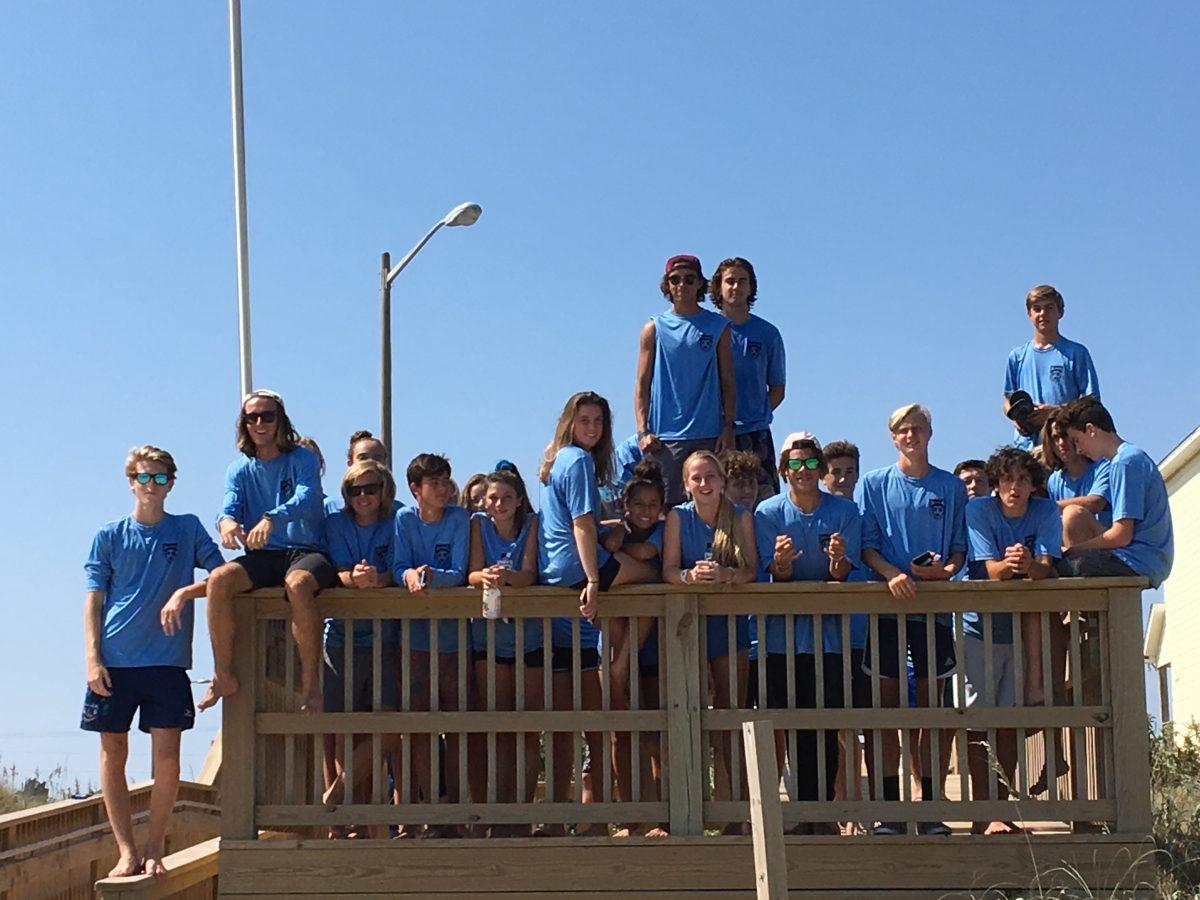
First Flight men’s and women’s soccer coach, Juan Ramirez, scheduled a first-time beach clean-up with his student-athletes in order to repay the community for its support.
Out of 60 players invited, 43 made an appearance at the Colington beach access. They were split into two groups and ventured to the neighboring piers: Avalon and Nags Head.
“It was tremendous. Everyone was there on time and really eager to walk on the beach to help clean up,” Ramirez said.
Although there was no exact quantity counted, the trash seemed more minimal than expected.
“The beach was actually pretty clean – some cigarette butts and a couple of bags here and there, but there wasn’t a noticeable amount of debris apart from the storm,” Ramirez said. “With (Dorian) I was expecting more debris and trash on the beach, so I was very happy to see that we didn’t collect as much as I was expecting.”
Senior Kyle Keller played an important role at the clean-up, not for being a team captain on the field but leading the team off the field. For him, the experience was beneficial and rewarding to help contribute to bettering the community.
“The experience makes us more grateful for how clean our beaches actually are and can be. It shows us how easy it is to help keep them clean like they should be,” Keller said.
Along the way, the team faced an unusual dilemma that required strategic and quick thinking in order to accomplish the desired goal.
“A fisherman caught a bird in his line. A couple of our soccer players ran over to untangle the bird and eventually got him free,” Ramirez said. “Later, we found another little bird and he looked like he was falling all over the place. We picked him up and laid him in the grass on the sand dunes hoping he would recover and survive.”
It’s not just FFHS athletes who get into the act. AVID teacher Cindy McNeill requires a certain amount of community service hours for her class. In order to complete these hours, she requires an authoritative witness and written documentation. McNeill mainly has students who clean up beaches in large groups, but also has some who independently clean up the beach and have a parent sign off as a witness.
“(My students) are required to do community service. So, a lot of them will participate in the planned beach clean-up days,” McNeill said. “But I also have kids that if they need to get community service will randomly say, ‘Can I go clean up the beach?’ ”
One of McNeill’s students, senior Gabby Murillo, doesn’t just clean up on the beach for volunteer hours. In fact, she picks up trash at multiple places on her own time as a hobby.
“Every football game that I go to, even if it’s away, I’ll pick up trash on my way out,” Murillo said. “After every home football game, I’ll clean up the bleachers and the area next to the grass because people always leave all of this trash from the concession stand.”
For Murillo, these actions aren’t taken lightly. She takes the job on a personal level when it comes to the environment.
“I’m really emotional when it comes to people throwing their trash on the ground because they’re too lazy to bring it to the trash can or recycle bin. It kind of hits a soft spot for me. I just feel like it’s unfair to our environment,” Murillo said.
When Murillo cleans up the beach on her own, it’s not always trash that she moves. She frequently finds birds and fish that can cause harm to adults and children walking along the shore.
“I’ll move the birds by taking sticks or something I have and carrying them to the dunes. If it’s a pufferfish, I will make sure to move it because those are dangerous for little kids who are walking by and could hurt themselves,” Murillo said. “Once I found this dead bird that had plastic all inside of it. It was one of the most emotional days for me on the beach so far.”
Some beaches are more polluted than others, so the Outer Banks is lucky to have influential students and leaders in the community who genuinely care about the environment.
“It’s our beach and in an ideal world, everyone should care enough to go pick up their trash,” McNeill said.
Junior Lexi Foster can be reached at 21fosterle79@daretolearn.org.