













By Cole Tomlin, News Editor
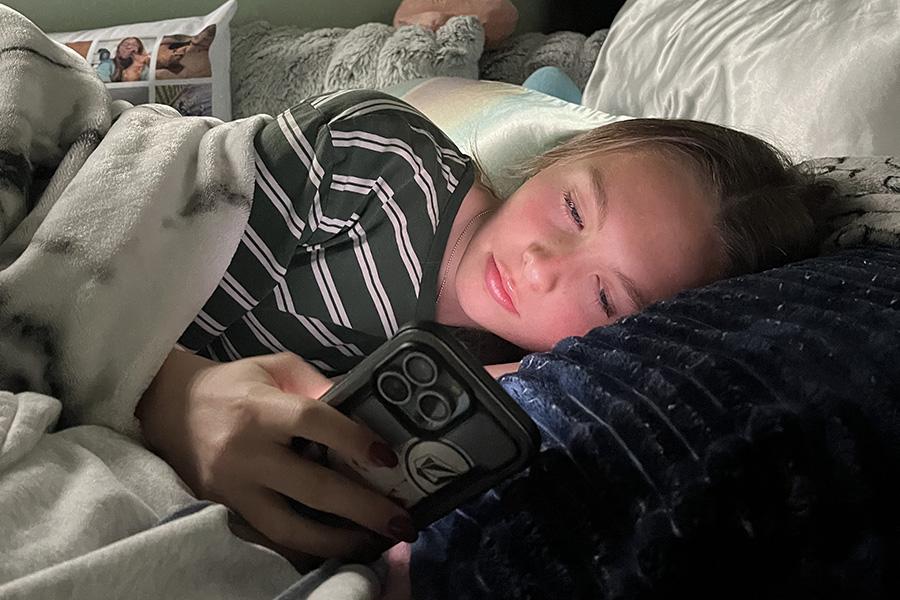
Waking up at 9 a.m. and logging onto your classes for just three hours may sound like an easy task; however, many students loathe online learning as well as the confusion that comes with it.
Learning online as opposed to being physically in school is a big change that took many students by surprise. As a student myself, I know first hand how difficult it is to go from learning in person for 12 years to suddenly sitting in front of a computer screen for every class.
One of the biggest challenges when it comes to learning online is that you get significantly less one-on-one time with your teacher, which is essential in certain classes.
For example, I took AP Calculus last year and I know I wouldn’t have passed that class without going to see my teacher before and after school for help. The problem students are now facing is that we no longer have this option, which leaves our parents next in line for questioning whenever we need help in a class.
For most classes, the only time you can email your teacher for help is between 1 and 3 p.m., which just isn’t enough time. Plus, most teachers are only doing two Google Meets per week, which leaves a lot of room for questions.
Another downfall of online learning is that some teachers overload their students with work without even realizing it. But, as a student, it’s not like you can email your teacher and tell them that they are giving you too much homework.
So, what should students do when they’re frustrated with online learning?
I believe that giving our teachers some leeway when it comes to learning new and exciting ways to teach online is okay, as long as this same tolerance is given to students.
With all of that being said, online learning does have certain positive aspects that can be utilized by students.
I will admit that it has been nice not having to be in school for seven hours a day, especially because I just had hip surgery, which would’ve made walking through the halls a lot more difficult than usual.
Plus, now that we are completely online, it is much easier for students to stay caught up on their work as compared to when we were in school. For example, when you missed a day or two of school before we were online, it would usually take you the remainder of the week and your weekend to get caught up. However, now it would only take a few hours to get the majority of your missing work done.
Furthermore, depending on your overall schedule and workload, you can work at your own pace and complete all of your assignments for a class in one day. This is especially true for students taking a lot of COA courses this semester.
Another benefit of online learning is that now almost every quiz and test is open note, meaning students no longer have to stress out once or twice a week for every class.
Overall, I believe as long as students and teachers have a mutual understanding that this experience is new for everyone, everything will work out by the end of this quarter.
And honestly, most of the teachers are being very understanding this year because they understand that for a lot of kids, learning online is much more challenging than in-school learning.
On the other hand, many students are taking advantage of the shorter school hours and striving in a more adult-like life, where they do school work for a couple of hours, go to work for eight hours, and then come back and finish up their work for the day.
Therefore, it’s up to you to decide whether or not online learning is having a positive impact on high school students living in this new COVID-19 world.
Senior Cole Tomlin can be reached at 21TOMLINCO11@daretolearn.org.