










By Kayla Hallac, Online Editor-in-Chief
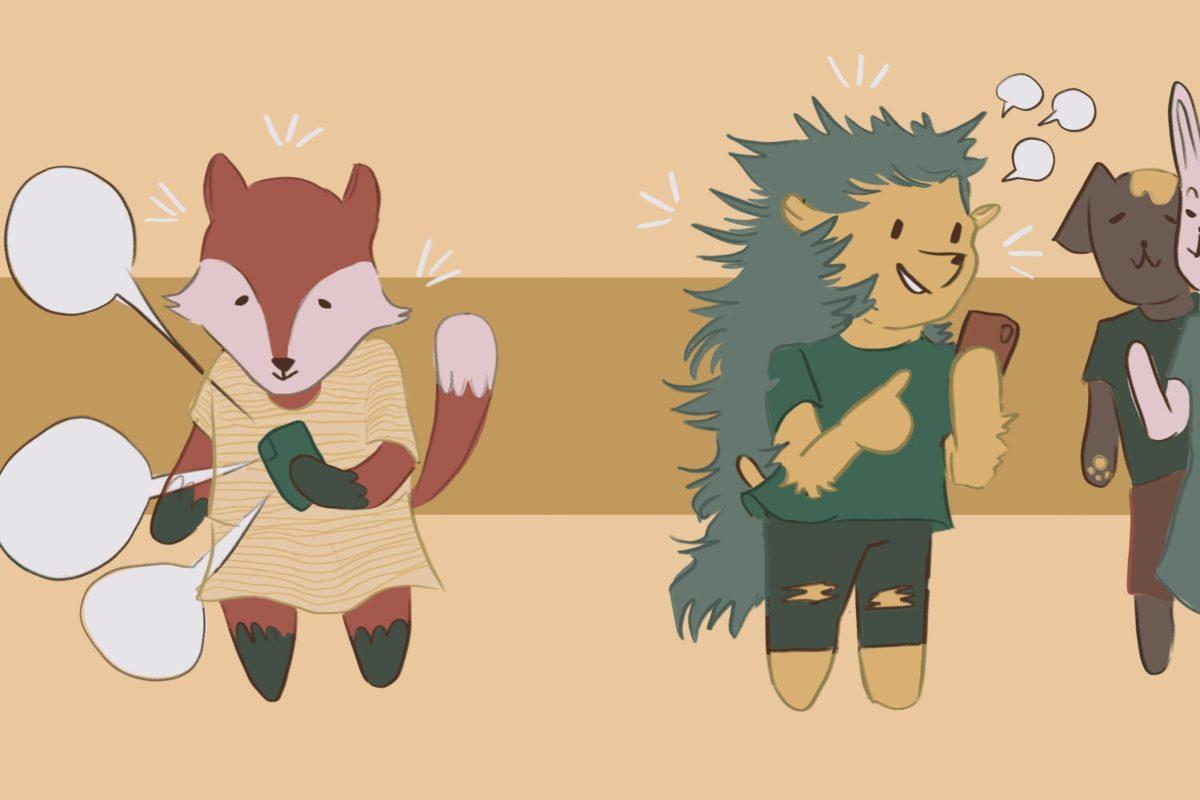
Are you a fox… or a hedgehog?
This is a question you’ve probably never been asked. Ancient Greek poet Archilocus stated the moral: “The fox knows many things, but the hedgehog knows one big thing.”
In a fascinating study I recently read by NPR, this old moral was connected to modern-day life, specifically about our world on the internet and social media vs. our world in real life.
The study associated the fox persona with people who know a lot of little things about many people through social media, while the hedgehog persona knows big important things about fewer people through live conversation.
Today, 3.8 billion people are active on some form of social media according to financesonline.com. This is over half the population of the world. While the way they utilize it varies, users have one big thing in common: It’s not always a valid representation of their lifestyle, and it limits our face-to-face communication more than ever before.
With less face-to-face communication, we’re not getting the influences we need to grow into the best version of ourselves, especially during a global pandemic.
SKYROCKETING SNAP SCORES
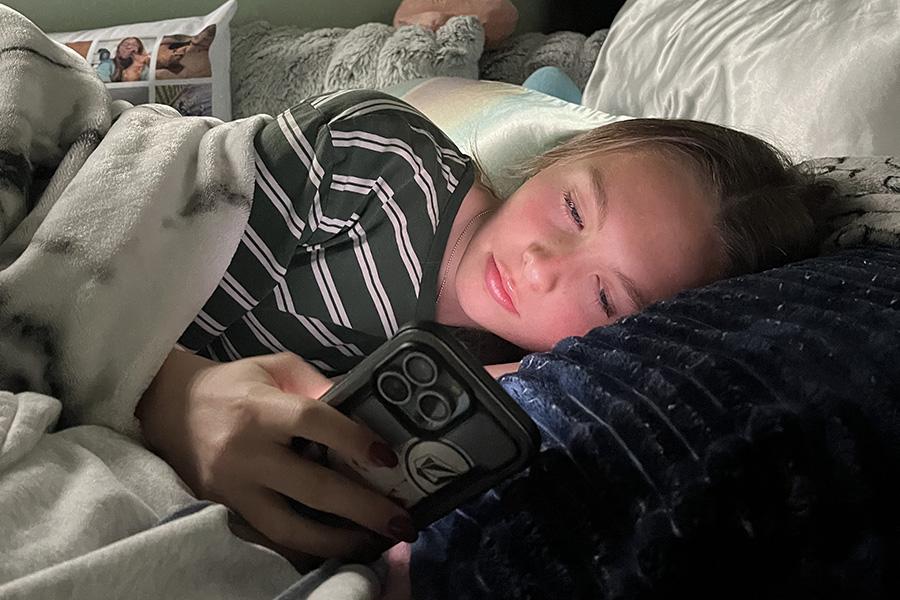
Senior Nevaeh Tucker thinks of herself as more of the fox persona. Her phone screen time averages around 10 hours a day, much of which is spent on social media.
Tucker believes it’s easier to communicate through the phone, whether it be social media or just a call, as opposed to in person with real conversations.
“You’re not looking at their face and there’s no reason to be nervous on the phone because you can’t see their facial expressions or how they’re reacting to what you’re saying,” Tucker said.
Much of her time is spent on the popular social media platform Snapchat. On this app, people communicate through sending pictures back and forth, using the “chat” feature, or posting what they want others to see on their Snapchat “story.”
“They control what they post, and most people aren’t going to post bad things, so they make their life look all dandy,” Tucker said.
Tucker has a combined “snap-score” (the number of pictures sent and received on the app) of over 1.6 million, one of the highest at FFHS.
She believes if she didn’t have Snapchat, she’d get more face-to-face interaction, becoming more of a hedgehog.
“It would force me to go and hang out with my friends rather than texting them all day,” Tucker said.
TRENDING ON TIKTOK
TikTok: the popular social media app where you can create and watch creative videos for hours on end. Many high schoolers dream of becoming “TikTok famous” by gaining thousands of followers. Sophomore Ava Norko stands out with nearly 24,000 followers on her account.
Norko got most of her followers from a video describing how she wished she had more followers; 300,000 people viewed this video, and 27,000 followed her account immediately.
Despite the wide array of followers Norko has, she doesn’t always love TikTok.
“I like how you can create your own videos and your own ideas, but I don’t like the fact that sometimes you get lucky, and sometimes you don’t,” Norko said.
When referring to “getting lucky,” Norko means getting one of your videos on other users’ “for you” pages, where they can see the video, like it and follow the account. These “for you” pages are the source of many teens’ free time – and the time they’re on their screens.
“I just love scrolling through all the videos, but then I realize I’ve used all of my screen time because I’ve just been watching those videos,” Norko said.
As opposed to being on her phone for endless hours during the day, Norko says she only spends three to four hours because of the screen time limit her parents put on her phone. This limit has helped her take time away from social media.
When referring to this limit Norko said: “Usually I’m upset because social media is where I can be creative and talk to my friends. Other times I understand where they (Norko’s parents) are coming from, kids spend a lot of time on social media and they just want to ensure I know how to manage my time instead of scrolling mindlessly all day.”
WHAT’S NOT TO LIKE?
The end goal for social media is the same for most users: more followers, more likes. But there’s plenty to hate about this chase for positive affirmation.
One student, who prefers to remain anonymous when discussing her social media usage, believes her Instagram use is out of hand and damages her face-to-face interactions.
“If I don’t (get many likes), it makes me kind of sad. If I do, it makes me happy,” she said. “It doesn’t matter in real life. You can get insecure a lot on Instagram. Sometimes, I just don’t like how my feed looks, so I delete it. It makes your life seem a lot more fun and easier than it is.”
When asked why she cared what others thought about her posts, she responded with, “I have no idea at all.”
So what does this say about our population who’s obsessed with these platforms and the time we put into them?
As people if we don’t know why we do something and keep doing it without a reason, it’s probably not the best idea. If it doesn’t matter in real life there seems to be no mental or physical benefit of continuing the action.
But there’s still 3.8 billion people active on social media today. This high number baffles me and makes me ponder why.
Why do these people including myself get a rush of serotonin or anger from something as simple as a double tap. We don’t know why, but it happens.
This “rush” is becoming more and more prevalent in today’s society, and sparks fear about what it will lead to in the future.
SOCIALIZING SERENELY
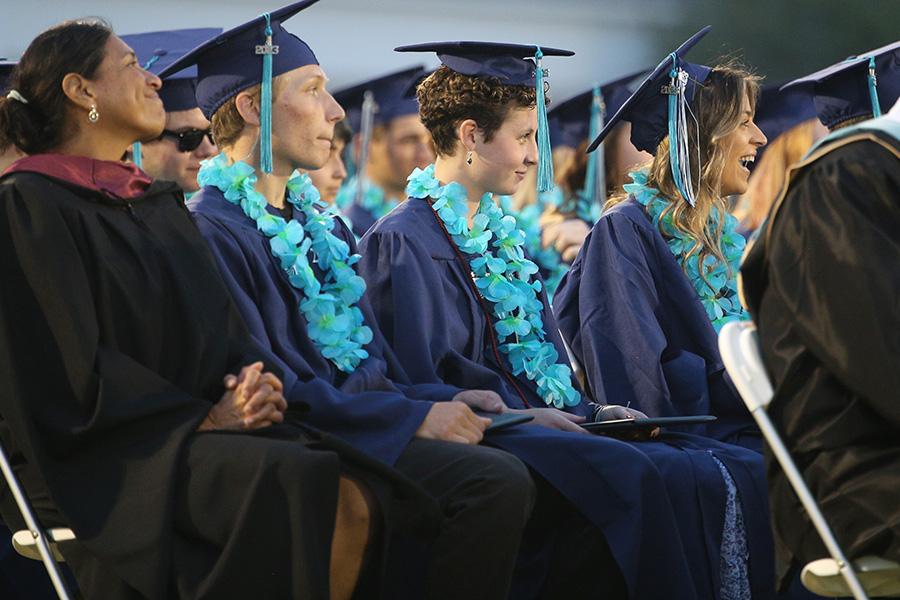
Senior Travis Lawrence has a different view on the gap between social media and personal interaction, spending about two hours a day on social media, including Twitter.
“I am a hedgehog. I know a lot of things about a few people. I have a lot of friends and I know a lot about them because we talk a lot,” Lawrence said.
Being a hedgehog, Lawrence appreciates face-to-face interaction more than online; however, he thinks he can use social media to his advantage.
“I do think it’s more valuable, but I don’t think social media takes away from it. I mean it depends how you use it, but it’s just a place where you put stuff about yourself,” Lawrence said.
It’s known that putting information about yourself on social media may sometimes create a fake persona. Lawrence thinks this is exactly the point.
Whether online or offline, Lawrence believes that everyone has the opportunity to emphasize certain parts of themselves. Unlike many, he claims to portray himself the same way in real life as on these social media platforms.
“I don’t think making a fake persona on social media is abusing social media. That’s kind of what the whole thing is, you just put parts of yourself that you like and it’s advertising,” Lawrence said.
Even so, Lawrence believes that social media is crucial for our future because of the influx of technology.
“Rejecting the future of technology is what causes the problems. We need to adapt to it,” Lawrence said.
COVID-19 CARRIES KIDS ONLINE
With COVID-19 and limited face-to-face interaction for health reasons, social media and online communication has become popular to an extent greater than ever before.
Through these different social media platforms, students have been able to keep in touch with people simply for their mental health.
Is endlessly scrolling through videos on Charli D’amelio’s page or posting pictures of you making a duck face good for your mental health?
Or what about “snapping” pictures of your forehead back and forth to your peers’ bitmojis all day. The pointless possibilities in the online universe are endless. To me, it’s a sign of increased dependency that might be too late to put in reverse.
Junior Kayla Hallac can be reached at 22hallacka85@daretolearn.org.