
















By Kayla Hallac, Online Editor-In-Chief
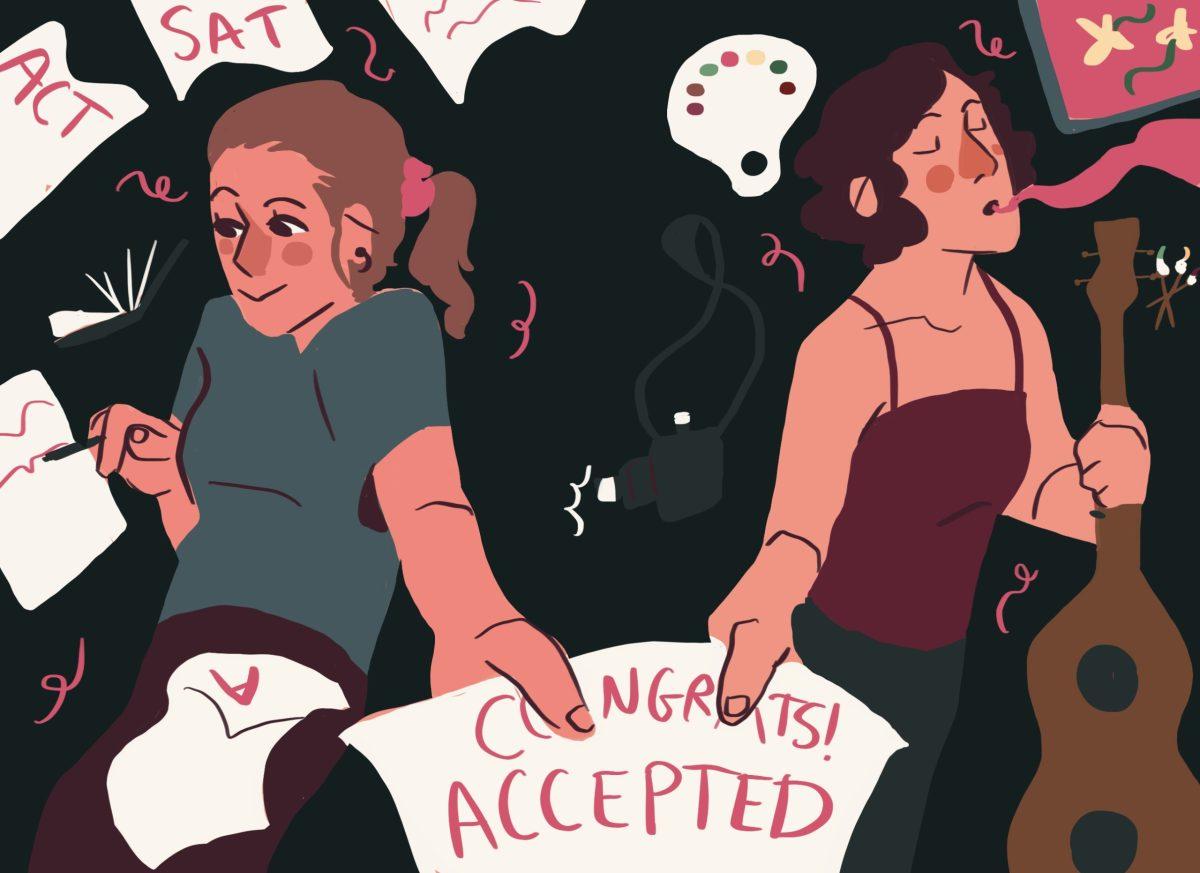
1600, 1200, 36, 18 – all numbers that define high schoolers in college admissions testing. But a 900 or 1540 SAT score doesn’t represent me, or any high schooler.
Taking the SAT and ACT is a compulsory requirement for every sophomore, junior or senior in preparation for the college application process. The system, however, is broken and unfair. There are much better ways to evaluate a high school student than his or her test scores.
Students pressure themselves to study extensively leading up to each exam. The pressure and stress builds up, and when test day finally arrives, tension is high and nerves are worn thin. The experience is horrible.
While the SAT and ACT test students’ skills in math, reading and English (plus an additional science section for the ACT), all these tests really do is measure high schoolers’ abilities to take tests and compare them to other students based on standards. They only measure your ability to take a test on that day, at that time, in those particular conditions – whether in a mask, mentally exhausted, or even ill.
Why are we being standardized? Why can’t we get good grades in our classes and show leadership in the community instead of being judged on a four-hour exam? It’s ridiculous. I should be out in the real world volunteering or making myself heard as opposed to doing Khan Academy for a test that’s weighted in college admissions more than who I am as a person.
The test itself isn’t even a good analysis of what a student has learned in high school. Claude Steele, a professor of social psychology at Stanford University, said in a PBS article that “the SAT measures only about 18%, (an) estimate range from 7 to 25%, of the things that it takes to do well in school.”
Beyond the inaccurate measure of knowledge obtained in high school, the SAT measures your score and accuracy based on other people in your school, state and the USA. You could get a different score on one SAT following the one you just took without any increase or decrease in knowledge because of a different set of questions.
Certain people get nervous in test situations, or just have bad test days, lowering their score. Affluent families may pay for expensive SAT prep programs and tutors, gaining an advantage others may not be able to afford.
In the time of COVID-19, over 900 colleges have gone test-optional and 69 have gone test-blind for the next few years of admissions. Some predict by the next high school generation, the awful tests will be abolished.
Test-blind schools won’t factor in your SAT or ACT score into college admissions. Even after the stress of taking the test, getting a solid score in the college’s range, they’re keeping college admissions fair in time of a pandemic.
This test-blind strategy could influence the type of people who get admitted to prestigious universities, giving less advantage to good test-takers and more advantages to really well-rounded people.
This is fantastic. It’s more valuable to the school because they’re more focused on the student as an academic whole, and that student’s longer history of academic performance vs. a large focus on just one indicator, which could skew the types of people who get into prestigious universities in a good way.
Test-optional schools allow you to choose to submit an SAT or ACT score. You have the option to submit your score based on the typical range of scores accepted for each individual university. A good SAT or ACT score could definitely give you a boost in admissions, making it puzzling how this is fair for students who didn’t have the opportunity to take the test.
The test is completely worthless and the system is broken. I should know: I’ve taken the SAT four times and the ACT once. But after studying and stressing so much about it, I can only hope it will give me a leg up on admissions in 2022 for colleges that still consider these scores.
My hope is that when future generations are applying to college, the broken system that’s setting standards for an unstandardized population, stressing kids out, and then charging us large sums of money to take the tests is nothing more than a distant, painful memory. High school students are worth so much more than a number.
Junior Kayla Hallac can be reached at 22hallacka85@daretolearn.org.