




By Kayla Loveless, Social Media Editor
If you looked me in the eye and told me with a straight face that I couldn’t do something, what do you think I would do? The exact opposite, that’s what.
When I found out that a police union in South Carolina wanted to ban “The Hate U Give” by Angie Thomas, the first thing I did was search for it on Google. Banning books does not have the effect people hope for it to have. If anything, it gives more exposure to the books and the themes that the people asking for bans find controversial or uncomfortable.
Banning books – the act of regulating certain books in schools because of their content – happens all over the country, and is not a new phenomenon. While parents, community members and others cite various reasons for wanting to ban certain books, a majority of the titles currently being challenged are about LGBTQ+ characters or characters of color. According to PEN America, the most banned book in the United States in 2022 was “Gender Queer: A Memoir” by Maia Kobabe.
PEN America annually creates a list of banned books. On its website, the organization states that it “stands at the intersection of literature and human rights to protect free expression in the United States and worldwide. We champion the freedom to write, recognizing the power of the word to transform the world.”
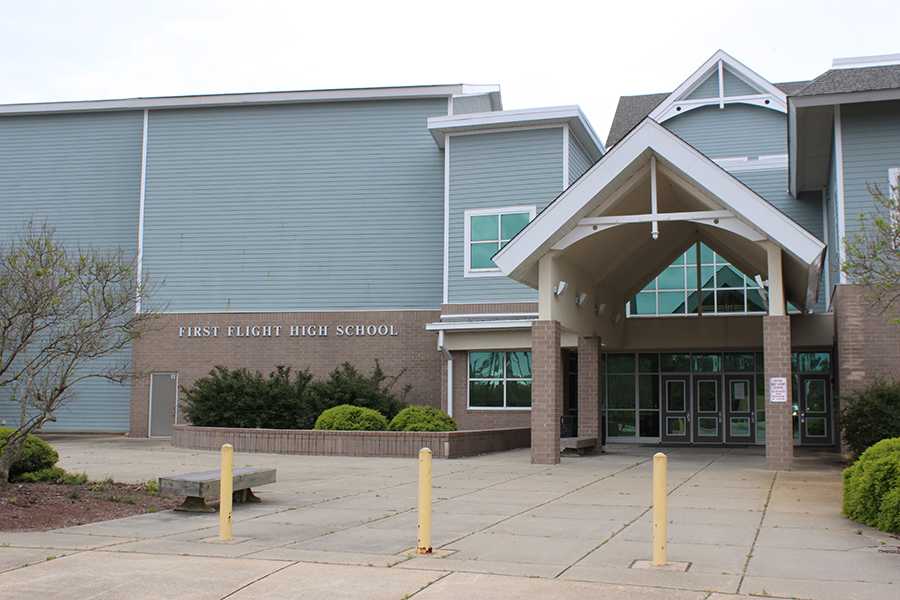
But if we’re looking a bit more locally, “Out of Darkness” by Ashley Hope Perez is a book that was released in 2015 about a love affair between two teenage characters of color in 1930’s Texas. Since its publication , the book has faced challenges across the country. It was challenged here several years ago and FFHS Principal Chuck Lansing and then-Media Coordinator Susan Sawin refused to ban it.
The issue surfaced recently with a local media report that the book had in fact been banned in a move approved by former Superintendent John Farrelly. That, however, is not the case. Lansing explained that the book is currently available in the library, but has never been checked out by students.
While Farrelly is no longer the superintendent, there are concerns that this kind of censorship could be in Dare County to stay. In November 2022, three new BOE candidates were elected, making the current Board wholly comprised of Republican members. Among these new members is Barry Wickre, who has made his thoughts about “inappropriate” books crystal clear.
“Over the past year, I have been reviewing the library books listed on Follett,” Wickre told the Outer Banks Voice in a candidate forum before the election. “I believe we have had and still do have books that are inappropriate.”
I would like to believe that a majority of FFHS students are mature enough to read a book about the struggles of people of color or members of the LGBTQ+ community and take it seriously. Banning a book that one in 300 students will read is not the most prevalent issue in our school system today.
Nationally, over 1,600 books were banned in the 2021-2022 school year. Of the top 10 books banned that year, five contained LGBTQ+ material. They were challenged for being “sexually explicit.”
It’s no surprise to me that a greater number of the books being banned are more modern and are being challenged because they contain information about issues of race relations or the lives and struggles of people who are part of the LGBTQ+ community.
But modern books aren’t the only ones being censored. According to the American Library Association’s website, titles that are considered to be “classics” like Harper Lee’s “To Kill a Mockingbird” or Margaret Atwood’s “The Handmaid’s Tale” are also falling victim to book bans. Critics have said “Mockingbird” should be banned due to racial slurs and references to sexual assault. Atwood’s story was banned from Texas schools for a handful of reasons, including profanity, being anti-Christian, featuring an LGBTQ+ protagonist and being overall “morally corrupt.”
When school board officials around the country allow their religious views to affect how they make decisions, it seems that the democratic ideal of the separation of Church and State is becoming more and more blurred. Allowing these elected officials to regulate what a student can read, especially for religious reasons, is something that feels very dystopian.
High school students are expected to be prepared for the rest of their lives by the time they are 18 years old. Preparing students for the future will always be more crucial than worrying over the media they consume in the present.
Junior Kayla Loveless can be reached at 24lovelesska73@daretolearn.org.