















Kitty Hawk, others follow Nags Head with beach nourishment project
January 12, 2014
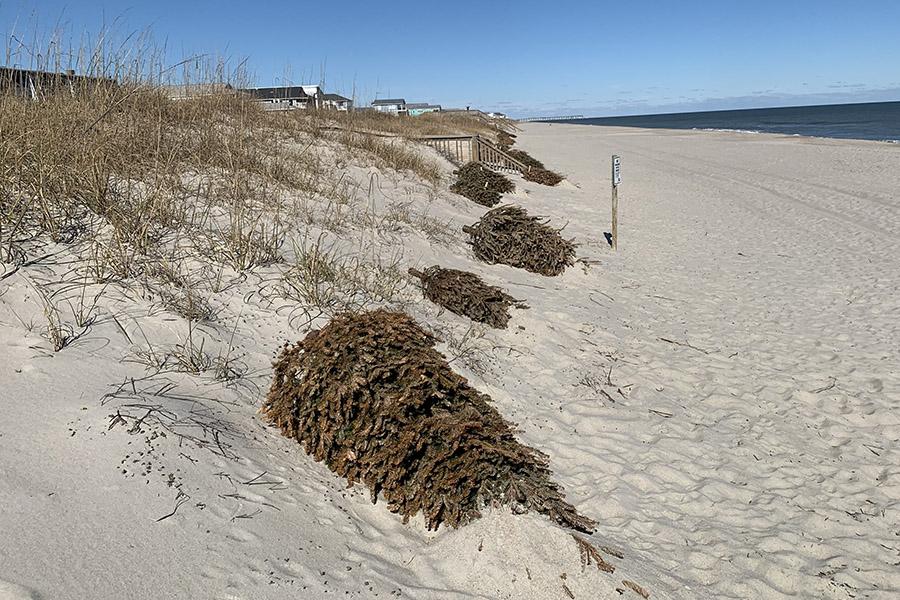
Try to imagine the Outer Banks without the beach. This may be hard to do because it has always been an important part of the community. However, if it is not properly nourished, it might only be a short time before it is gone.
Following the lead of the Nags Head beach nourishment project in 2011, Duck, Kitty Hawk and Kill Devil Hills have followed suit, recently signing off on multi-million dollar projects to replenish their beaches. The federal government refused to fund the project. The towns collectively agreed to share county funding in order to proceed.
Completed at an approximate total of $36 million in Oct. 2011, the Nags Head project is not scheduled to be renourish until 2016 or when 50 percent or more of the sand has been lost from the project area. The rest of Dare County will take about two and a half years and spend an estimated $42 million to nourish.
“If the beach nourishment project is not completed, it is anticipated that erosion will continue in the hot spot areas of the town,” said Duck Town Manager Chris Layton. “This erosion would result in virtual loss of a dry beach for recreational use in the project area and the eventual loss of up to 174 oceanfront properties.”
The beach is the main tourist attraction of the Outer Banks. Losing the beach means losing many of the tourists. Not only is the beach important for the tourism industry, but it is vital for the enjoyment and employment of locals and could have a major effect on oceanfront real estate as well.
“The town of Kill Devil Hills believes that beach nourishment is important for economics and storm protection,” said Greg Loy, Kill Devil Hills Planning Director. “The beach is the number one reason for our tourist industry and storm hazard mitigation provided by a wider renourished beach benefits the entire town. Our tourist industry directly provides the majority of our total employment and most jobs are associated, in some way, with tourism.”
There are many steps involved in correctly nourishing a beach, some of which include: pre-project environmental monitoring, permitting, sand search, easement acquisition, plans and specifications, bidding and contract award, construction and environmental monitoring. In order to nourish a beach, sand must be brought in from other areas in order to replace the sediment that has been lost from longshore drift or erosion. But above all, public support is key.
“You first need to have public support,” said John Stockton, Town Manager of Kitty Hawk. “When the public and the Town Council are willing to investigate the costs associated with beach nourishment, then you can develop a program. You will need to do a preliminary investigation, which establishes any historical data that is available and supports your need for beach nourishment. The funding of a project can be done through general tax revenues, borrowing funds, receiving grants from the state or federal government, establishing special tax districts or receiving financial assistance from the county.”
Outer Banks locals may not like the idea of increased general tax revenues, but they should keep in mind that the additional tax will sustain property values and continue the tourism that is crucial to the local economy.
“If we didn’t not nourish the beach, our town would see more of what was happening just prior to our project,” said Roberta Thuman, Nags Head Public Information Officer. “Home values were declining because of the eroded beach and the homes that were littering the beach. In addition, tourism dollars were eroding along with the sand.”
Beach nourishment is not the only option for erosion prevention, however, hard structures such as seawalls, jetties and groins are generally unapealing to the eye and can potentially be dangerous for swimmers.
“If we are going to be rehabilitating and preserving the coastline then beach nourishment is the best option,” junior Blair Flatt said. “It doesn’t place a large structure on the beach such as a seawall or jetty and does not negatively impact the ecosystem.”
Send comments to hickski0307@daretolearn.org