

















Overuse of cellphones may lead to sleeptexting
March 25, 2014
By Christopher Oakes and Becky Dixon
Features Editor and Health Editor
Technology plays a key role in society and can serve as a guide in your everyday life. But how has that affected us? Technology has become so deeply ingrained in the minds of youth that it is even beginning to play a role in their sleeping habits.
The use of cell phones, specifically for texting, is on the rise among teens and poses a threat toward their sleeping patterns. According to a study by the Kaiser Family Foundation, teens spend 53 hours per week on average engaged with some form of electronic media. This could be negatively affecting the sleep patterns of these young people.
The median number of texts sent on a typical day by teens ages 12 to 17 rose from 50 in 2009 to 60 in 2011, according to the Pew Research Center’s Internet Project.
New studies published in Nature show that the artificial light produced from electronics can disrupt sleep cycles with echoing effects. Looking at a laptop, phone or TV before going to sleep inhibits the production of melatonin, the hormone that promotes sleep, and keeps you from reaching deeper sleep stages.
“I do think texting, TV, Twitter and Instagram keep me up if I am trying to sleep,” sophomore Channa Mielke said. “So, a good 30 minutes before I go to sleep I cut all of those off, which does help. I think if others without actual insomnia, who just have trouble sleeping, did the same it would help them more than they think it would.”
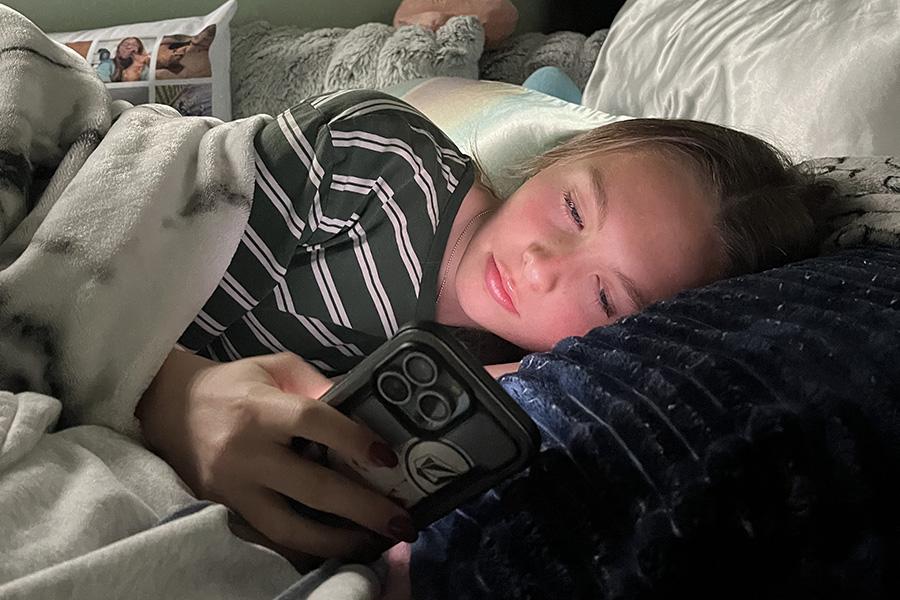
Another result of teens’ obsession with technology is the plague known as sleep texting. With cell phones playing such a significant role in the lives of teenagers, it’s not surprising that reports now indicate that teens are so accustomed to texting while awake that they continue the activity in their sleep.
“I sleep text all the time,” senior Maile McNaughton said. “I wake up in the morning and have no memory of the texts on my phone. I’ve never really considered that this could be a result of my being too dependent on my cell phone, but that is kind of scary. If I can send a text, who knows what else I could do.”
Dr. Andrew Stiehm told Allie Shah of The Star Tribune that it is possible for the part of the brain that controls motor skills to wake up and function while the part of the brain that controls memory does not. This is why people can sleep walk, talk, drive and even text.
“You can’t do anything in your sleep that you can’t do automatically when you’re awake,” said Mitchell Bateman, Dare County Schools psychologist. “The more you do something, the more automatic it becomes so the more likely you will be able to do it in a semi-conscious sleep state.”
Students are not the only ones affected by the use of cell phones and other technologies. Teachers regularly have to deal with the repercussions of cell phone overuse.
“I think technology can be very beneficial but I think also (it can be) very distracting,” English teacher Jane Shipman said. “Many students become so involved and so engaged with the social aspect of phones and computers that they lose sight of some of the ways they can be used beneficially.”
No solid research has been conducted on sleep texting and other effects of technology on sleep. There are only theories. One suggests the overuse of electronics bleeds into teenagers’ sleep, keeping them awake longer. Another theory claims that stress and the general lifestyles of teenagers cause sleep texting and lead to a lack of sleep.
According to the Federal Aviation Administration, disruption in a person’s normal sleep cycle can lead to mood swings, loss of appetite and impaired decision-making.
“Ever since I started using my phone more in high school I’ve kept myself up at night to cruise Twitter,” sophomore Christian Vargas said. “I’m usually pretty tired at school the next day but I have a hard time getting to sleep.”
Another reason teens may want to reduce cell phone use is the potential for other health issues. Some studies suggest that cell phone radiation can cause brain cancer from phone-to-ear contact, testicular cancer in men from keeping phones in pants pockets and breast cancer in women who run with their phones in their sports bras.
According to the National Cancer Institute, research has not shown a consistent link between cellphone use and cancer of the brain, nerves or other tissues.
When asked to comment on the possibility of cell phones causing cancer due to radiation, Chesapeake Neurology declined due to the lack of available research and data.