














Teens drawn to risk: the science behind it
December 12, 2012
Ever wonder why teens seem to make riskier decisions than adults? This question has plagued parents for generations. New research shows the teen brain may hold the answer to that age-old question.
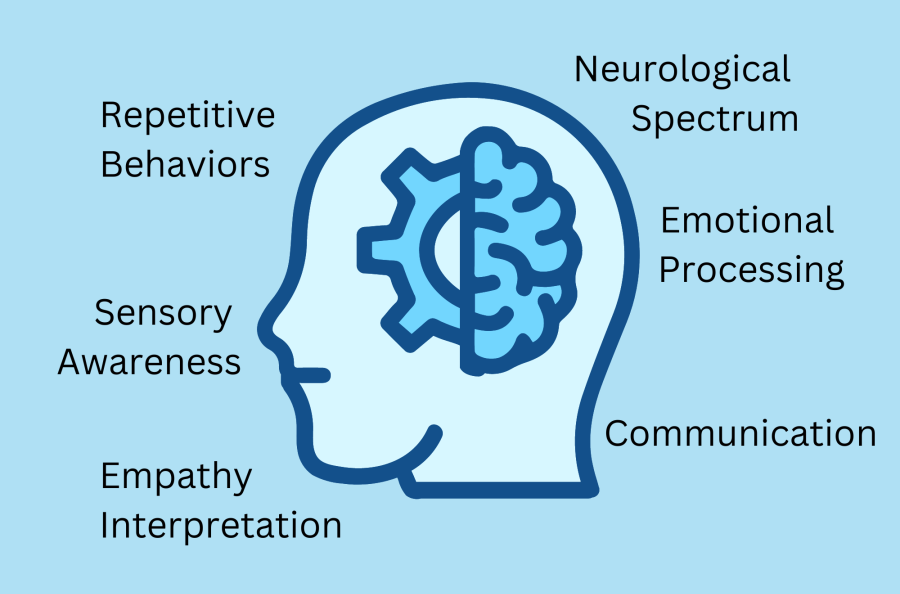
Teenagers’ brains are wired differently than adult brains, and their decision-making skills are not fully developed. If adolescents are fully aware of the risks and consequences in a situation, they are overall less likely to engage in the activity, according to a study published in the October edition of the Proceedings of the National Academy of Sciences.
“If the risks are known, adolescents engage (in risk-taking) less than adults do, but if they are unknown, this is reversed,” lead study researcher Agnieszka Tymula, a postdoctoral fellow at New York University, told Maia Szalavitz, health writer for TIME.com.
Researchers found teens generally overestimate risks but underestimate the consequences of the risks. Unlike adults that examine risks vs. rewards, teens tend to focus more on the potential rewards than on the actual consequences.
That’s not exactly how senior Michael Pryor sees it.
“I think teens make risky decisions because they feel like they’re invincible and want to live before they work in a cubicle,” Pryor said.
Researchers reported that adolescents in the study overestimated risks as opposed to adults. That seems like a reasonable assumption, according to sophomore Dolan Potter.
“I know quite a few people who should probably take more time to think before they act,” Potter said.
The study also indicated that adults tend to focus on consequences and can infer whether or not to take risks based on certain features of the adult brain. That stands in stark contrast to the way the teen brain analyzes risks.
“This tolerance for unknown risks might stem from an underlying biological feature that makes learning about the unknown less unpleasant for adolescents than it is for adults,” Tymula told Time.com.
Judgement skills utilized in everyday decision-making are not fully developed until well after the high school years, said Mitchell Bateman, psychologist for Dare County Secondary Schools.
“In young children and teens up through early 20s, the ability to make good, sound judgement decisions is not as well developed as it is until somewhere between the mid-20s and up,” Bateman said. “There are neurotransmitter substances in the brain that help with the control and the decision-making processes and those are just not well developed or fully developed until, like I said, the mid-20s.”
The adult way of thinking through risks includes the variable of experience, which teens lack, according to Bateman.
“Some of the risk-taking behaviors are tempered by experience. It’s a balance, even with young people. It’s a balance between the chemical (and) biological development of the brain and experience,” Bateman said. “Just from the experiential portion of what (teenagers) use in judgement about making decisions, (they) don’t have it, because (they) just haven’t lived through enough similar experiences.”
Many students and adults alike believe that adolescents are now facing risks at an earlier age than in previous generations. Bateman refers to three of the most prevalent issues teens face – drugs, sex and alcohol – as the Big Three.
“With those three things, what I do see is that those three questions are having to be answered by young people today at an earlier age than ever before,” Bateman said.
Some students believe that the influence of not-so-positive role models in modern-day society can be blamed for the risky decision-making.
“People tend to look up to those who are older than them,” senior Nikki Couch said. “Kids want to grow up too quickly and copy those who are often bad influences, which has passed on bad decisions at an earlier age.”
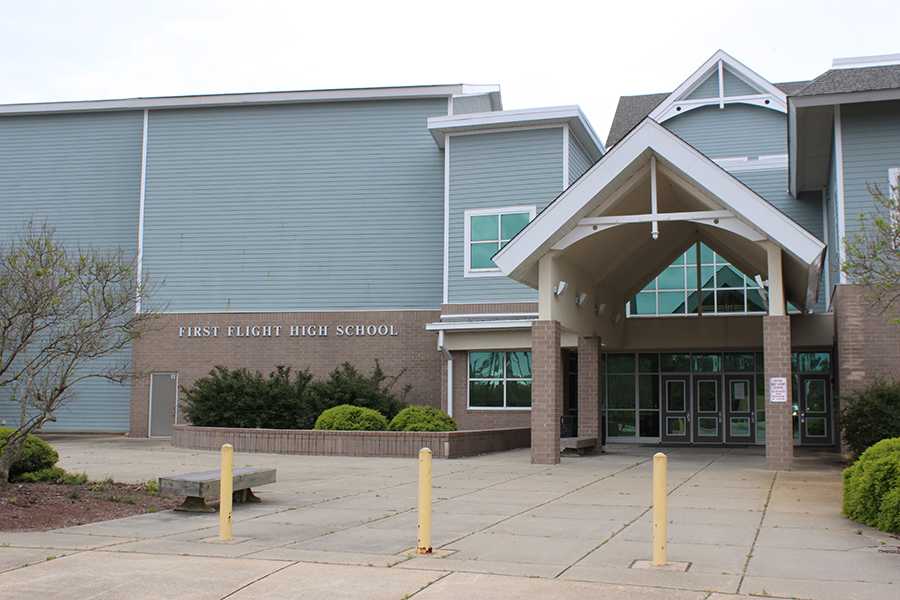
Many national and local organizations in addition to school clubs try to raise awareness of the dangers of risky decisions. First Flight and Manteo High School’s Students Against Destructive Decisions Club (SADD), hold mock car crashes before prom night to show students the dangers of drunk driving. As long as teenagers focus on rewards more than consequences, they will put themselves in danger by choosing risky behaviors.
Bateman says it’s good for adults to provide opportunities for teenagers to learn about the consequences. However, nothing works as well as experience.
“You can talk to them all you want to and usually, for some it will have some level of effect. But take them to an accident scene where alcohol is involved, show them films and movies and things of what happens,” Bateman said, “it has some effect. Unfortunately, until it touches your own life in some way, it doesn’t get driven home as well.”
Send comments to skinnerjo0611@daretolearn.org and munsonme0523@daretolearn.org