









Online relationships may not be all that meets the eye
March 25, 2013
By Kate Taliaferro
Social Media Editor
[dropcap]I[/dropcap]s the person you are talking to on the Internet really who you think he or she is or just pretending to be that someone? Is it possible to know who’s really behind the computer screen?
“They (teenagers) are very trusting when you have predators who come online and say the right things. They work that angle and that’s typically how it starts,” school counselor Lisa Wheless said. “You have the trusting person on the other side where all of sudden someone pays attention to them, they start feeling good about themselves and they don’t look past that, then personal information gets sent.”
Even adults may be too trusting, including Notre Dame linebacker Manti Te’o. Te’o had an online relationship with Lennay Kekua. However, Kekua was actually a man known as Ronaiah Tuiasosopo. Kekua and Te’o conversed via internet and phone but had never met in real life. They met on Facebook in 2009, at first as an “acquaintanceship,” said Te’o. The two had contact on and off, but things changed in 2011. When Kekua began to contact Te’o again in October, the two were unofficial, but things were moving quickly on the Internet, especially on Twitter.
In an interview with Jeremy Schaap, writer for ESPN.go.com, Te’o claimed their relationship was never exclusive until she was supposedly involved in a car accident on April 28, 2012. Kekua was in a coma for several weeks, but it never crossed Te’o’s mind to go visit, because he was focused on college.
After Te’o learned of her physical state he began to consider her as his main priority. Kekua supposedly woke up from the coma in mid-May. After the scare, Te’o knew she was the one he wanted to be with.
Te’o wasn’t the only football player Kekua had talked to. Former Oregon State quarterback, Lyle Moevao told Te’o that she was real. He never thought to ask if they had met in person.
Around the end of June, Te’o was told Kekua had been diagnosed with Leukemia. Their online relationship grew even stronger during this time. Shortly after returning to school for his senior year, Te’o got a call on Sept. 12, 2012, from Kekua’s oldest brother, Koa informing him that she had passed away. This news came just hours after learning his grandmother had also passed away from cancer. Te’o was overcome with emotion, confusion, sadness and anger. He missed Kekua’s funeral for the Michigan football game; he claimed that it was what Kekua had wanted, but still honored her by sending white roses. He spoke of his losses before the Heisman Trophy presentation on Dec. 8, 2012.
Te’o began to contradict his story, even with his family. Deadspin, a sports website, conducted extensive research, according to CNN.com. Deadspin posted an article about the online relationship and identified the face of Kekua as a girl named Diane O’Meara from Torrance, Calif. O’Meara claimed a former classmate (Tuiasosopo) contacted her for pictures and videos. O’Meara told Deadspin that she contacted Tuiasosopo after learning of the hoax and he “immediately began acting weird.” Over several direct messages on Twitter to Te’o, Tuiasosopo admitted everything on Jan. 16, 2013.
“This is incredibly embarrassing to talk about, but over an extended period of time, I developed an emotional relationship with a woman I met online,” Te’o said during a press conference after Deadspin posted the article. “In retrospect, I obviously should have been much more cautious. If anything good comes of this, I hope it is that others will be far more guarded when they engage with people online than I was.”
In an interview with Dr. Phil McGraw on Jan. 31, Tuiasosopo claims that he eventually grew feelings for Te’o that he could no longer control. He also provided a reason as to why he created Kekua. He said his main motive was because of his childhood. He was sexually molested as an adolescent and used Kekua as an escape from reality.
”I felt that I couldn’t do things, accomplish things, pursue things, live out as Ronaiah,” Tuiasosopo said. “I felt the need to create this. It has everything to do with what I went through as a child.”
Tuiasosopo claims to have tried to stop the relationship numerous times, but Te’o wanted to stay together.
“The truth is, I hurt every day from the decisions that I made,” Tuiasosopo said. “I can’t express how sorry I am toward Manti and his family, and everyone affected by this.”
Te’o continues to struggle with the fact that he was lied to, but he said to Schaap, that he’ll be fine as long as his family is OK.
“To be honest with you, it doesn’t seem real. I hope he learns. I hope he understands what he’s done,” Te’o said to Schaap. “I don’t wish any ill thing to somebody. I just hope he learns. I think embarrassment is big enough.”
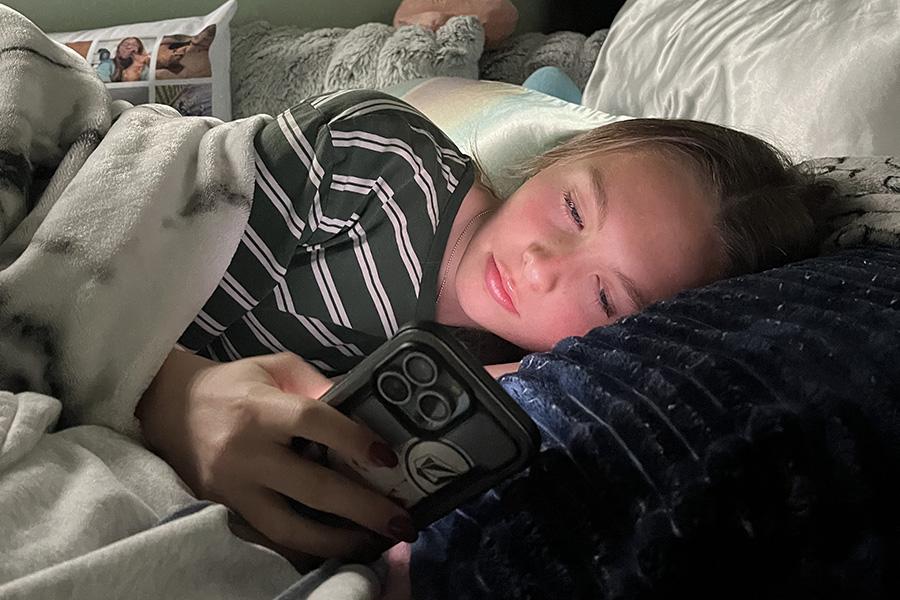
As technology advances each day so does the risk of knowing who you are really talking to via electronic devices.
“There are many risks to online dating. You could end up meeting someone completely different than the person you met online,” senior Mabel Soe said. “There’s the risk of falling in love with that person and they suddenly disappear and there’s always that extreme risk that the person you are in a relationship with turns out to be a rapist or a stalker.”
Lying about physical features is one thing. However, someone could be lying about their lifestyle, personality or even their identity.
“The incidences of these situations are increasing because of the widespread technology,” said Mitchell Bateman, one of five Dare County Schools psychologists. “I would expect for every one case reported there are probably hundreds of cases that go unreported.”
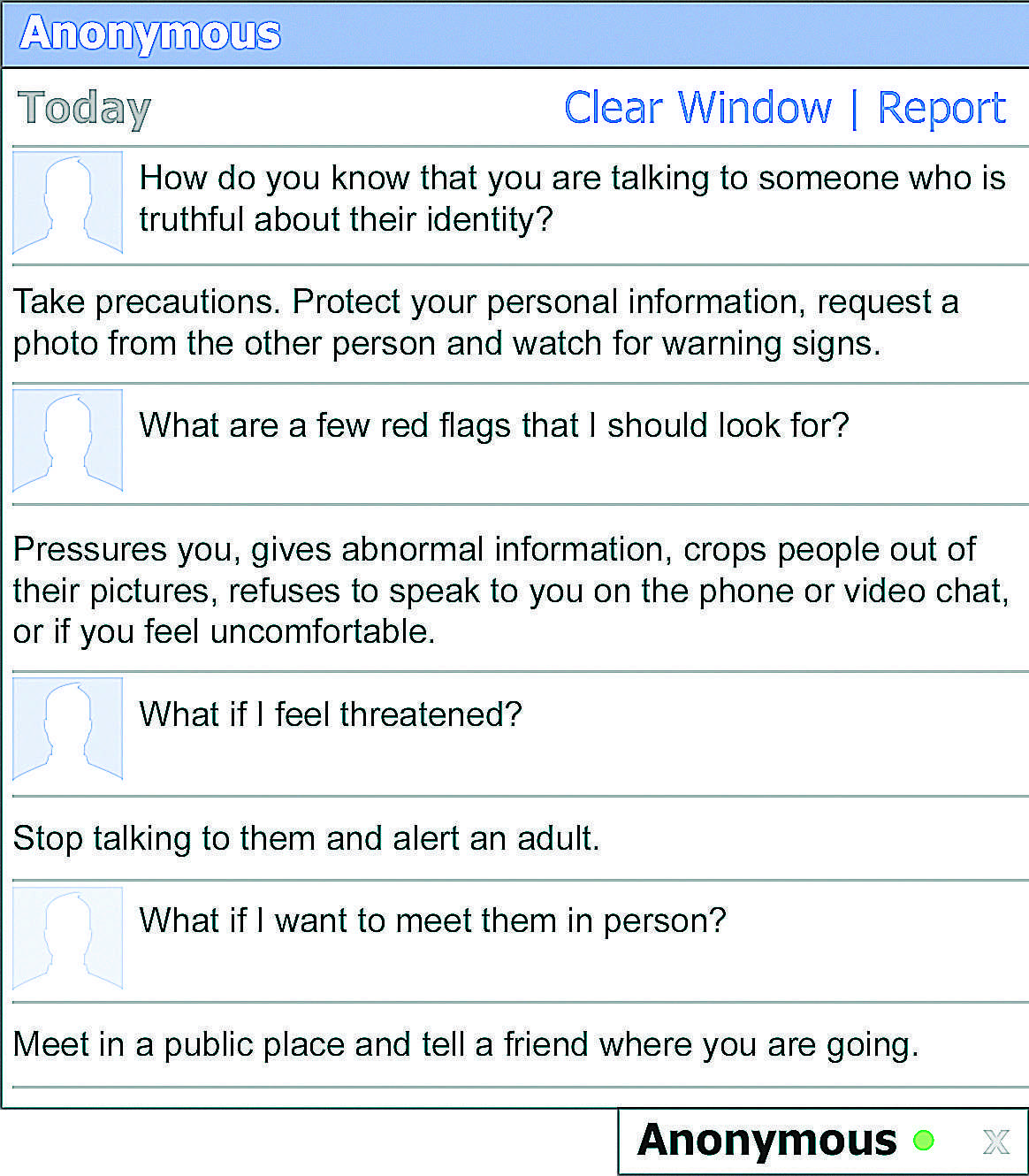
The best ways to be cautious when engaging in online relationships, are to protect your personal information, don’t give out your last name, address or phone number and request a photo. If the other person makes up an excuse for not sending a photo, then stop interactions with him or her. Talk on the phone, meet in a public place and tell a friend where you are going. Watch for warning signs and protect yourself, according to Health.HowStuffWorks.com.
While some online relationships can turn bad, others do have a happy ending.
“We met on Tumblr. We both liked the same TV shows and movies so we followed each other and began to talk,” said one student who asked to remain anonymous. “It was hard at first because a lot of people didn’t understand that even though we met online, our relationship was still real. We used to text, Skype and mail each other stuff all the time, and we finally met last year. The distance is horrible, but it gets easier.”
Technology is making it easier to have online relationships. That can be a good thing for some, leading to a long-term relationship, or a bad thing for others, leading to a list of lies.
“Being safe on the Internet basically comes down to being smart,” the anonymous student said. “If someone gives you a creepy vibe, then they are probably creepy.”
Send comments to taliaferroka0725@daretolearn.org