














By Grace Sullivan, Online Editor in Chief
I’m sitting in my doctor’s office waiting for my wellness check when I hear it – a new mother saying, “Oh, she isn’t going to be vaccinated, I don’t trust those things.” In all 18 years of my life, I have never understood why on Earth you would reject a vaccine, and seeing someone in the flesh actually say it blew my mind even more.
Living in the 21st century, our advances in the medical and technological fields are growing by the day. I believe we are becoming the most educated generations to have ever lived. Our STEM fields are flourishing and people are able to take advantage of all the great advances we’ve made. In the midst of science and medicine thriving and saving the lives of millions, there’s one thing that causes a huge divide: vaccines.
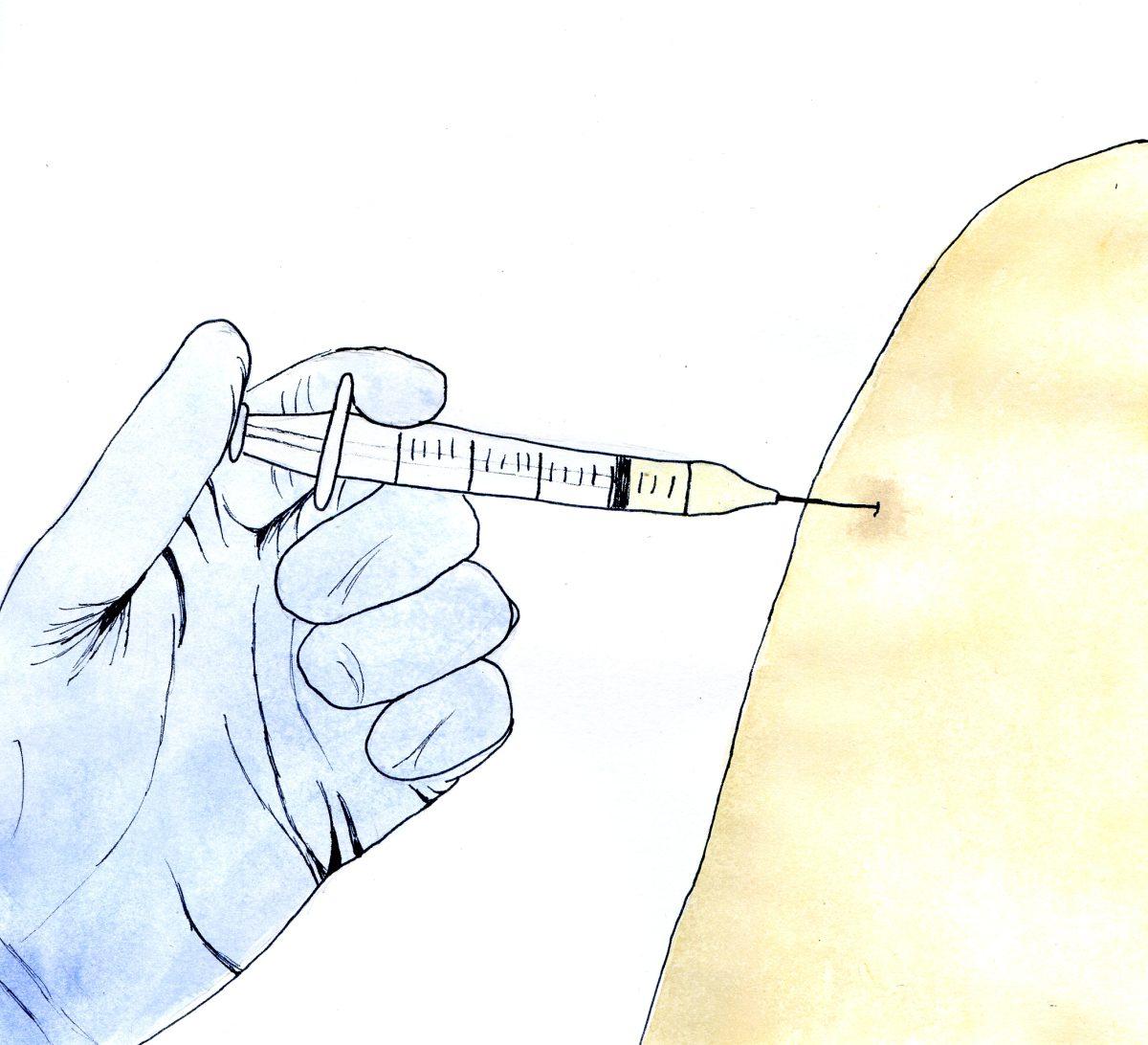
Before arguments are made, the basics must be laid down. What exactly is the purpose of vaccines, and why are they debated so heavily? According to the United Nations World Health Organization, a vaccine is a biological preparation that improves immunity to a particular disease. It introduces the disease to your body, so when the time comes, your immune system will already be used to having the disease since you have already detected it earlier in your life. Some vaccines you get more often – like a flu shot – while the HPV shot, a disease you slowly build immunity too, is done once every couple of years.
Within the past 30 years, vaccines have become the subject of countless controversies. Papers have been published supporting both sides, all with one intention: persuading and informing the public. You read these papers and all of them say different things.
Some say vaccines have insane amounts of metals, which in turn cause autism or do the opposite of their job and give you the disease they are trying to prevent. The other half of research papers say vaccines are a key staple in our world and without them we would still have diseases such as polio and measles running rampant in daycares and schools.
I truly believe vaccines are crucial to our health and our communities. Without them, we are dismissing millions, if not billions, of dollars of research and decades of testing all because of a Facebook post that said someone’s daughter got a rash after her flu shot. Who do you trust more? The doctors and professionals who went to school for this, or the parents on the internet who read one article and think they knew more than a pediatrician?
When you decide you aren’t going to vaccinate, not only are you hurting yourself but you hurt the people who surround you, too. In 2000, measles was declared to have been eliminated from the US. However, in January of this year, Washington declared a state of emergency due to a measles outbreak.
State officials connected this outbreak to their vaccine procedures, which let parents refuse vaccines for their children due to “philosophical reasons.” After over $1 million in damages and nearly 100 people sick, this outbreak shows what really happens when vaccines are not employed. Vaccines were made to help propel our medicine into the future, yet this outbreak drags us down.
The phrase “philosophical reasons” is what is preventing us from moving forward in vaccination technology. These reasons refer to a couple of recent findings, one of them being a paper published in 1998 by Dr. Andrew Wakefield and his colleagues that connected autism to vaccines.
Less than a decade later, nearly all the people who contributed to that paper took back their statements, and in 2018 that paper was withdrawn and discredited. Though this paper has been declared false by dozens of professionals, a large amount still view it as the Holy Grail of anti-vaxx.
This theory is the largest problem I have with anti-vaxxers. The phrase “vaccines cause autism” is not only scientifically incorrect, but also extremely insensitive. You are saying, “Oh, I would never want my kid to have autism, but measles or polio? Sure, my essential oils and teas can handle that!” It’s disgusting, appalling and a slap in the face to those who have autism or have children with autism.
The vaccine argument is one that will go on for years, even decades. Hundreds more papers will be published, outbreaks of diseases that were once gone may return, but whatever happens, the divide will still be there. The one thing that should not change is that we need to stay informed and educated on the issue. Without knowledge on the problem, we can give no solution to something that could hurt our communities permanently.
Senior Grace Sullivan can be reached at sullivangr1129@daretolearn.org.