










By Emmy Trivette, Editor-in-Chief
The Outer Banks is “doomed” in the face of the climate crisis, according to the Charlotte News and Observer. National Geographic questions the estimated survival rate of our barrier islands, and even the Washington Post and The Guardian have recognized that the North Carolina coast sets a precedent for the rest of the country “post-global-heating.”
At this point in the debate over global warming and climate change, not many people are questioning the reality of the climate crisis. Instead, scientists are trying to determine what part of the rapidly changing climate will hurt the Outer Banks the most.
Will it be sea level rise? An increasing number of hurricanes? Great intensity in these tropical systems?
“The bottom line is that these storms are getting more frequent and more severe, especially in terms of rainfall that is associated with them,” said Hans Paerl, a Kenan Professor of Marine and Environmental Sciences at the UNC-Chapel Hill Institute of Marine Sciences in Morehead City.
For 40 years now, the Dutch professor has studied North Carolina’s coastal environment. His focus is monitoring nutrients in estuaries and how they affect algae growth in that particular ecosystem. But with the changing climate, and therefore changing environment, Paerl’s work has led him to also analyze disturbing weather patterns impacting the East Coast.
“If you’ve got a hurricane sitting right offshore, and it’s very close and impacting the coastal zone, and you’ve got one of those highs (high-pressure systems), it’s just collecting rain and dumping it over the coastal area,” Paerl said in a Skype interview with Nighthawk News.
According to the National Oceanic and Atmospheric Administration (NOAA), the hurricane strengths seen now are soon to be upstaged by even more intense storms as the earth’s climate warms in the next century.
From Floyd in 1988 to Florence in 2018, Paerl explained that unusual hurricane patterns have been present for quite some time. He notes that while scientists have recorded and closely studied a long-term hurricane dataset, not many have bothered to look at the storms’ yields in terms of rainfall.
“The rainfall is really the big problem,” Paerl said. “Because that of course impacts the release of nutrients and organic matter and pollutants that are coming downstream into our coastal waters.”
Increased rainfall will affect the amount of flooding that, for the moment, locals are primarily concerned with. But once the runoff from increased rainfall is taken into account, other issues arise.
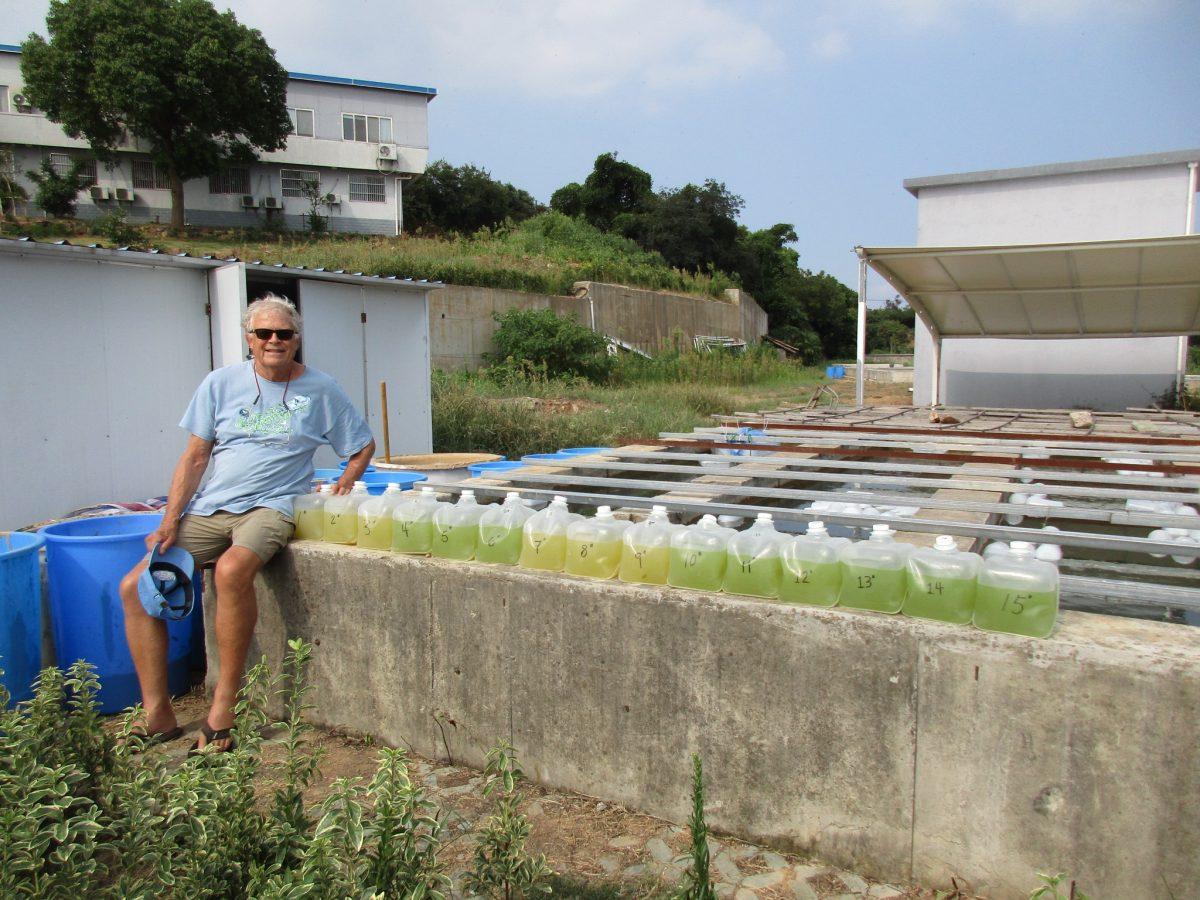
That’s what First Flight’s very own Phytofinders Club discovered when it began studying water quality right off the Outer Banks’ coastline: a bloom of phytoplankton Pseudo-nitzschia, a neurotoxin responsible for amnesic shellfish poisoning.
“We think what mainly causes it (the Pseudo-nitzschia) is the rain draining off of the coastline, where they’ve had golf courses and lawns that are fertilized,” club supervisor Katie Neller said. “Phytoplankton are little plant-like algae, so when that drains, those nutrients drain into the ocean, and it causes (the Pseudo-nitzschia) to bloom. It feeds them.”
Paerl has also noted a spike of algal blooms in the last five years.
No one can say that they’ve seen any crabs or sea mammals asking around for forgotten personal information because of the amnesic poisoning, but looking at the various photo ops of beached whales and dolphins in the past year seems to be evidence enough of the phytoplankton’s presence.
Humans haven’t been directly impacted by the neurotoxin; however, a broken ecosystem will result from this bloom of phytoplankton, and the sea life that sustains the fishing and tourism industries of the Outer Banks will suffer.
Just ask Florida residents, who during the “red tide” blooms of 2018 lost more than $20 million in tourism dollars, according to an abstract from the University of Florida. And now, Tropical Storm Nestor is being blamed for more red tide blooms this fall off the Florida coast, with reports of more dead sea life washing onto beaches in the Sunshine State.
So what needs to happen to protect the OBX? Paerl wants to see the creation of a swift recovery and protection plan for estuaries before, during and after hurricanes make landfall to prevent future hits to the wildlife and economy of the Outer Banks.
“We need to get local legislators knocking, making noise up there in the northeastern part of the state,” Paerl said.
Senior Emmy Trivette can be reached at trivetteem0626@daretolearn.org.