







By Kayla Hallac, Staff Writer
Zoooooooom – the distant sound of a small machine reaches your ears. It sparks a contagious look upward for everyone in the near vicinity, all fascinated by the flying object in the sky.
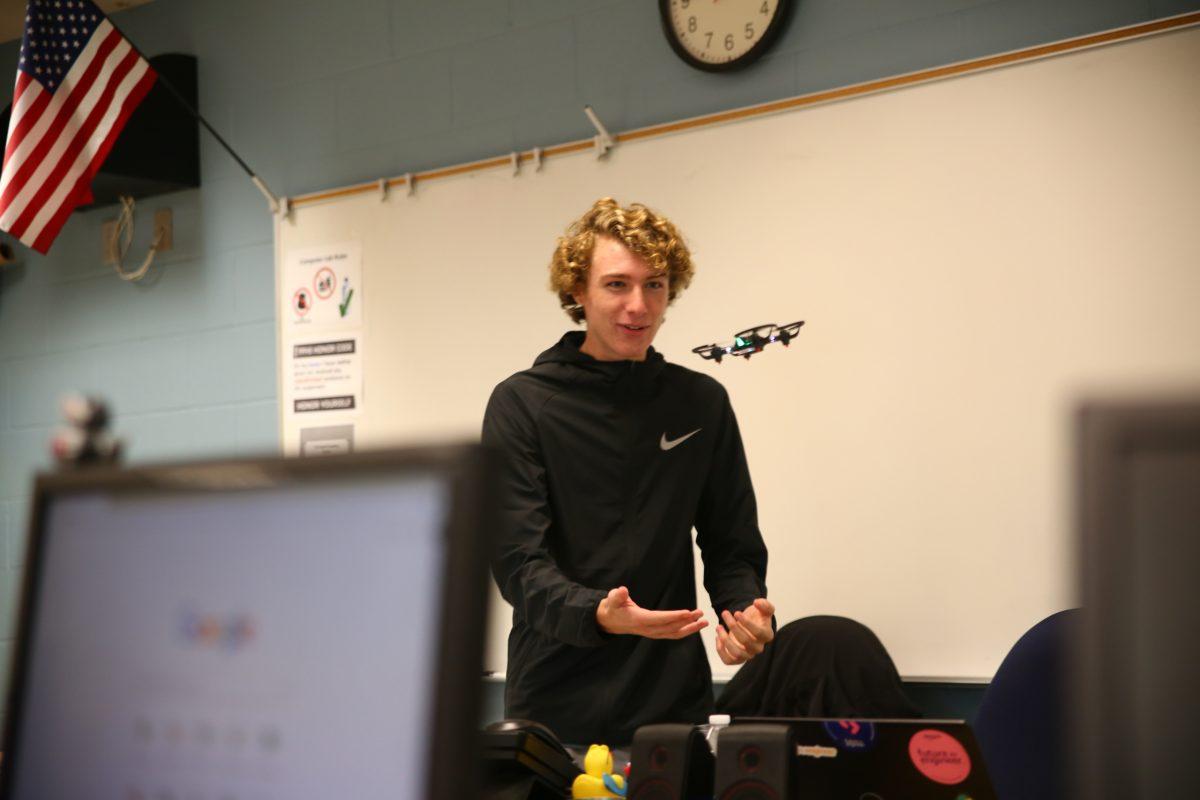
It’s a drone, of course. And now, that buzz of excitement, along with the 10 new drones housed by computer science teacher Nancy Stevens, has taken to the air across First Flight.
These drones now allow students to have a “birds-eye” view of the Outer Banks and provide new technology for advanced programming – especially for Stevens’ new Python Programming course.
Stevens was able to purchase the drones with LEDs for indoor use with money left over at the end of last school year. The use of these new drones is just beginning, but so far portrays very positive results.
“We’re using a block-based language, but students are actually programming the drones to take off, and fly, and do a few little tricks in the room,” Stevens said.
Applying what’s learned in classes like Python Programming and seeing it conveyed in technology has made waves for First Flight students.
“We just thought it would be a great way for students to actually see something happening when they program because sometimes you don’t see the results of what you’re programming,” Stevens said.
One of the most exciting things for Stevens was seeing the enthusiasm students displayed for coding the drones and observing how they play a role in creating a future for many in her computer classes.
“I think there’s enough there to engage students and think about possibilities in not just coding, but also there’s a lot of job opportunities involving being able to fly drones,” Stevens said.
Some have even taken it beyond the classroom and invested in drones for themselves.
Junior Jacob Stewart and sophomore Tucker Crook both own drones that they use to document and share all of what the Outer Banks has to offer them from that bird’s-eye view.
“Last year, I made a summer video with it,” Crook said. “I did the ocean and stuff, which is kind of cool.”
This fresh technology gives students a different frame of reference to explore.
“You can get a perspective that no one else has, and get really interesting pictures that no one else can do,” Stewart said.
The aerial view of a drone has created new opportunities on multiple scales. After Hurricane Dorian, 54 new inlets were created on Cape Lookout National Seashore. This wouldn’t have been discovered without drones.
“You see the before-and-after pictures showing damage or changes that happened to a landscape,” Stewart said.
The unique components of what a drone can do have surpassed expectations for Stevens’ class and other students enjoying the hobby.
“The easier access to drones exposes more people to the technology that can be used for photography, or just getting a different view on life,” Stewart said.
Sophomore Kayla Hallac can be reached at 22hallacka85@daretolearn.org.