















By Mackenzie Edwards, Online Editor-in-Chief
Recently, athletic trainers’ roles have become more prominent in the media and sports. Previously, athletic trainers typically held a behind-the-scenes role in helping athletes, but after Buffalo Bills player Damar Hamlin nearly died on an NFL field on Jan. 2, the important role of athletic trainers has been brought to light.
Athletic trainers have many jobs, from making sure athletes have their physicals to treating athletes’ injuries when needed. They look over your medical history to make sure everything checks out and you are cleared to play a sport. They monitor practices and every home game in case of an emergency. In the state of North Carolina, they are even required to travel with football teams. No matter what, athletic trainers are there to help with every student-athlete’s medical needs.
Typically, students, parents and coaches undergo a meeting at the beginning of the school year to address concussions and other health risks associated with playing sports. FFHS Athletic Trainer Lindsay Austin was unable to hold that meeting this year because she did not arrive until the second semester. The Nighthawks had to use part-time trainers filling the position until Austin was hired.
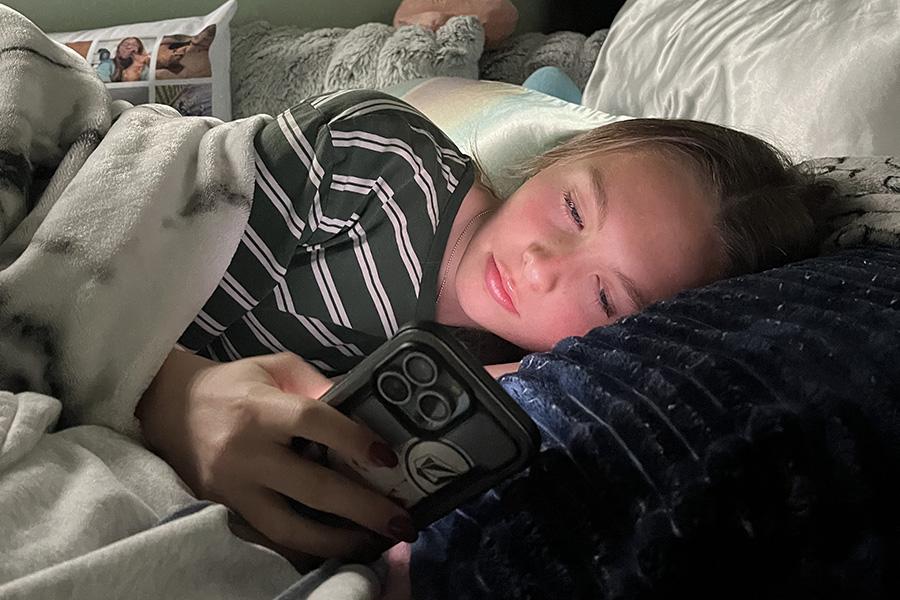
Although athletes may think they are insignificant, concussions are truly a very serious condition.
“I always tell people when they get a concussion, it’s not something to play with. It’s not a broken bone. It’s not a cut. It’s not something that I can see,” Austin said. “I have to rely on that student-athlete to tell me what’s going on.”
Senior cheerleader Mayson Ogburn unknowingly suffered a concussion in seventh grade when she was dropped from a cheer stunt. She collided head-on with another cheerleader, who was taken to the hospital for a concussion. Obgurn was unaware at the time that she was also suffering from a concussion.
Ogburn experienced several symptoms without understanding what she was going through. She was disoriented, crying and had headaches. She went to go see the athletic trainer, who then recommended she go to the emergency room to follow proper concussion protocol.
Ogburn was then sent to the hospital for a CT scan in a neck brace to help stabilize her spine in case there was a spinal injury from the fall. Upon being released from the hospital and able to return to her sport, there were many requirements before she could rejoin the team.
In order to return to a sport after a concussion, an athlete must complete a five-day exercise program and be asymptomatic from a concussion for at least 48 hours. Many times, a doctor’s visit may be required to return to play. Athletic trainers are the next step to making sure you are fit for return.
“I had to check with (the athletic trainer) about running laps, so I had to run a certain number of laps for a certain amount of days, and I had to do conditioning before I actually went back,” Ogburn said.
If an athlete ignores the signs and continues to play through a concussion or returns to their sport too early, they can suffer secondary impact syndrome. Secondary impact syndrome can cause a much more severe outcome that can lead to traumatic brain injuries.
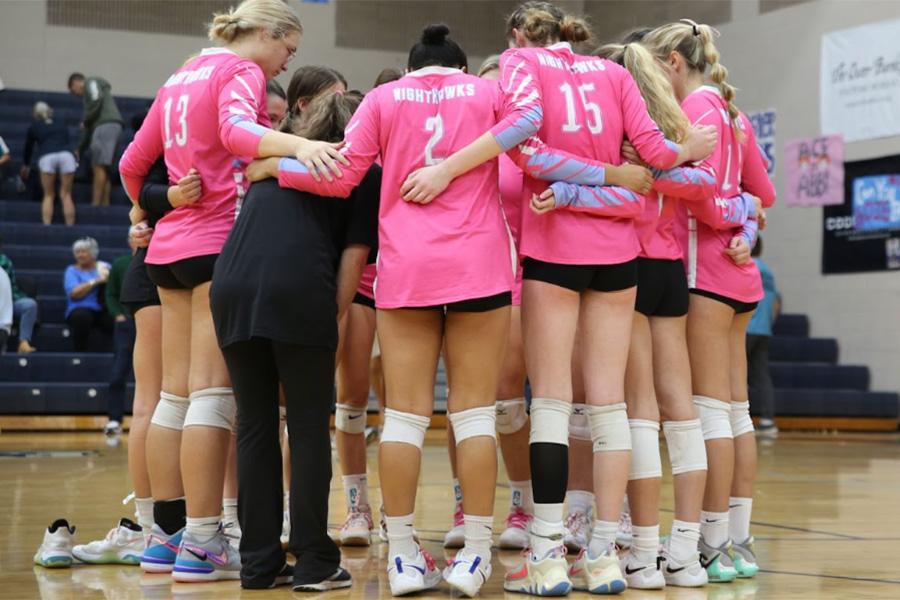
Darlene Sherman, a volleyball coach from the Metropolitan area who moved to the Outer Banks, has suffered the effects of secondary impact syndrome firsthand.
Her first concussion was severe: One of her players accidentally hit her in the head, causing her to pass out. She later went to a neurologist, who recommended she take two weeks off of coaching. A week after her return to coaching, she was hit by another ball to the head.
The second concussion was much worse for Sherman. At first contact, she became disoriented and lost the ability to communicate. At the time, they didn’t know, but the second concussion caused her heart to weaken, which also showed signs of a heart attack and stroke. When she regained her communication skills, she returned to the same neurologist. This time, the recommendation for her treatment was a month off from coaching.
It seemed as if things couldn’t get worse, but unfortunately, they did. Once she was finally able to return to coaching, she was hit on the top of the head with another ball. She suffered her most severe concussion of the three, with a brain deficit. She was taken to a specific sports neurologist, who ran several tests to determine her functioning state.
This concussion was so severe that she was not able to count, not able to see, had no balance, lost muscle control and had many other severe symptoms. The sports neurologist she visited ordered an emergency CT scan, which revealed a brain bleed from the multiple concussions she had due to secondary impact syndrome.
People who have had a concussion before are three times more likely to experience another one. This rate can be especially higher in athletics and can cause such severe symptoms as it did for Sherman. She takes concussion protocol and athlete safety very seriously after her personal experiences.
“The chance of re-injury is also progressive and to the point where each concussion becomes more serious with less of an impact, so it can really change your cognitive functions long term,” Sherman said. “That’s what scared me, so I stepped away from coaching for seven years. It was really hard because coaching at that time was my sense of identity.”
Sherman has since resumed her coaching at a much smaller local volleyball club, though she has to be very cautious about her concussions and risk of recurrence. She is very cautious of her health and her players if one of them takes a hit because of her history.
“I just think that it made me as a coach more aware that volleyball is a high-impact sport: You can take a ball from a serve pretty hard,” Sherman said. “It’s also why I’m so strict about my girls talking and communicating not to have collisions on court, or two people going after the same ball, because it’s severe.”
Everyone can react differently to concussions, so it is important to pay attention to your body.
“I would go and get checked out,” Ogburn said. “I really would just in case because it could be damaging to your brain. You never know, it could be bad.”
Austin echoed similar thoughts.
“I just try to stress the importance of you only get one brain,” Austin said. “That’s not something I can fix. That’s not something I can replace. That’s not something that’s going to grow back and you don’t want to damage it beyond repair.”
Senior Mackenzie Edwards can be reached at 23edwardsma78@daretolearn.org.
