






By Arabella Saunders, Features Editor
Picture this: a Thanksgiving meal free from the bombardment of questions regarding your life plans — Any colleges in mind? Know what you want to be when you grow up? — or comments on how much you’ve grown (or how much you haven’t). Free from the dreaded “kids table,” where you sit and contemplate your own death as you watch sweet potatoes run down the chin of your 2-year-old cousin. Free from your distant relatives who still make you uncomfortable no matter how much you prepare yourself to converse with them.
Instead, picture a holiday meal surrounded by your closest friends, out from under the microscope of adults, better known as: Friendsgiving.
The term Friendsgiving first originated in the early 2000s to describe college students who couldn’t afford to travel home for Thanksgiving. While most high school students are not faced with the challenges that accompany attending a school thousands of miles away from home, many students have embraced the idea of “Friendsgiving” and even put their own twists on the faux holiday to make it their own.
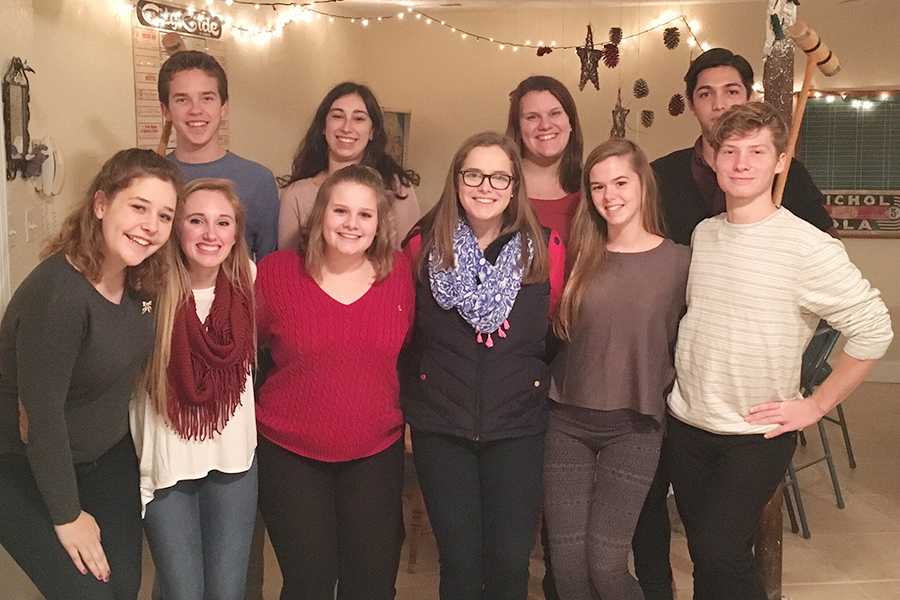
Junior Kiersten Lewis first participated in Friendsgiving last year. Accompanied by about 10 of her friends, she and the group chose a house with the most spacious dining room and served the holiday meal potluck-style.
“It wasn’t typical Thanksgiving food at all. There were chips and cookies and Oreos and there might have been some mashed potatoes,” Lewis said. “I brought spaghetti.”
Just as Friendsgiving food can be non-traditional, some choose to take the unorthodox route when providing the food as well.
“We did a potluck,” senior Katy Spore said. “But I just went to the store.”
Friendsgiving is up for interpretation. Unlike Lewis and Spore, junior Karsen Beckner plans to stick with typical Thanksgiving dishes this Friendsgiving.
“There’s definitely going to be mashed potatoes and mac and cheese,” Beckner said. “And a turkey, obviously.”
In addition to the debate over what types of food should be served, there are also differing opinions regarding parental help when preparing the meal.
“It’s called Friendsgiving,” Beckner said. “Not Parentsgiving”
Junior Ida Greenlee enjoyed the homemade dishes present at Friendsgiving; however, she admits the preparation can be a bit of a challenge at times.
“I’m a really bad cook,” Greenlee said. “So it’s always interesting with me in the kitchen.”
Friendsgiving, just like Thanksgiving, can get dramatic. Your mom and aunt may not be rehashing childhood feuds, but Beckner agrees that petty arguments can still ensue at Friendsgiving.
“There can definitely be typical drama, like at Thanksgiving,” Beckner said. “Like if someone sits in a seat that someone else wants to sit in, or if one girl likes a boy and another girl does too and the boy is there.”
Beckner added, laughing: “Or if someone eats the last serving of mashed potatoes.”
Though different friends celebrate this mock holiday in different ways, most can agree that it’s refreshing to share a celebratory meal without your parents hovering over you.
“You’re all the same age and it’s just more fun and not as awkward,” Spore said. “But there’s still the same family vibe.”
Friendsgiving may have its quirks, but in the end, it’s all about being grateful for the people around you.
“It’s not really anything out of the ordinary,” Lewis said. “Just being thankful for what we have and it’s just a reminder that we’re lucky to have the friends we have.”
Got a “Friendsgiving” story to share? Add it in the comments!
Junior Arabella Saunders can be reached at saundersar0214@daretolearn.org.